Dermatology sources and published cosmetic-chemistry research broadly agree on three tiers. Ethyl ascorbic acid begins showing measurable skin benefits at roughly 2%, performs best for everyday brightening and antioxidant support between 3% and 5%, and can safely be pushed up to 10–30% in advanced serums aimed at stubborn pigmentation or sun-related damage.
That range gives you the headline, but concentration alone never tells the whole story. Formula pH, stability, the delivery vehicle, and your skin’s personal tolerance all shape how well any given percentage actually performs once it hits your face. The sections below unpack exactly what to expect at each strength so you can shop with real confidence instead of trial and error.
Table of Contents
What Is Ethyl Ascorbic Acid, and Why Does the Percentage Matter?
Ethyl ascorbic acid labeled on ingredient lists as 3-O-ethyl ascorbic acid or EAA is a modified form of vitamin C built in the lab with an ethyl group attached at the third carbon position. That small structural tweak does something big: it shields the molecule from oxidation, which is exactly where traditional L-ascorbic acid tends to break down and lose potency.
According to the Paula’s Choice Ingredient Dictionary, this derivative dissolves in both water and oil, which gives formulators unusual flexibility when building serums, creams, and ampoules. Once it penetrates the outer skin layers, sodium-dependent transporter proteins convert it back into active vitamin C the form that brightens skin, neutralizes free radicals, and supports collagen production.
Percentage matters because too little under-delivers results and too much can trigger tingling, redness, or contact sensitivity in reactive skin. Landing on the right dose for your goal is half the battle.
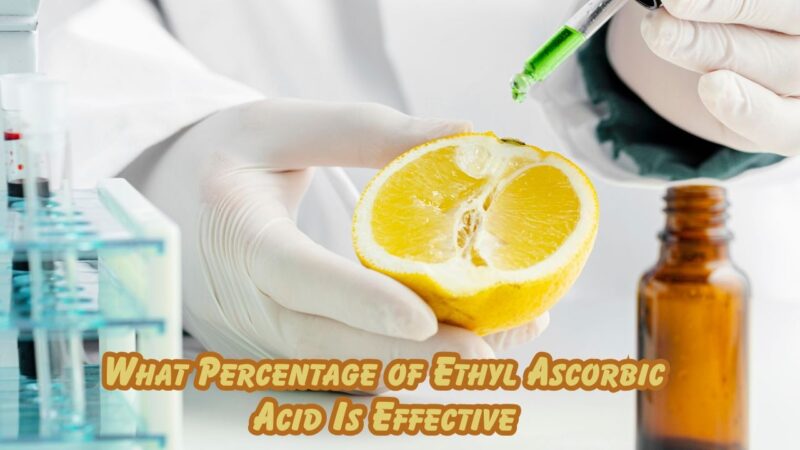
What Percentage of Ethyl Ascorbic Acid Is Actually Effective?
Short answer: A concentration of 2% is the clinically tested floor for visible brightening, 3–5% is the most commonly recommended daily-use range, and 10–30% formulations are typically reserved for intensive treatment serums targeting dark spots, melasma, and photo-damaged skin.
Here is a side-by-side view of how each strength generally performs:
| Concentration | What It Does | Best For |
| 1% | Gentle antioxidant support with minimal irritation risk | Sensitive or first-time users |
| 2% | Proven visible brightening in clinical in-vivo testing | Early pigmentation and uneven tone |
| 3–5% | Balanced daily brightening and collagen support | Most skin types, routine use |
| 10% | Stronger fade-correction and deeper antioxidant defense | Stubborn spots, dull complexion |
| 20–30% | High-intensity professional-grade treatment | Melasma, advanced photoaging, short courses |
The Minimum Threshold That Delivers Real Results
Independent ingredient database Incidecoder reports that in-vivo clinical data has shown a 2% concentration of ethyl ascorbic acid is capable of genuinely improving skin tone and reducing visible pigmentation. That figure is widely treated across the skincare industry as the lowest dose where brightening begins to appear on real human skin rather than only in laboratory cell studies.
A 2021 investigation published on ScienceDirect pushed the evidence further, demonstrating that 3-O-ethyl ascorbic acid inhibits tyrosinase the enzyme that drives melanin production and functions as an effective skin-whitening agent in both cultured human cells and zebrafish models. That is the mechanistic reason even modest percentages can visibly shift pigmentation with consistent use.
Why 3–5% Is the Industry Sweet Spot
When asking what percentage of ethyl ascorbic acid is effective for most people, the honest answer lands squarely in the 3–5% band. This is where formulators consistently hit enough brightening power without pushing into irritation territory.
Short answer: A 3–5% concentration balances visible results with skin comfort, which is why it dominates widely available daily serums and moisturizers.
Research published in MDPI Cosmetics via PMC noted that vitamin C begins producing measurable anti-aging activity at around 5% in cosmetic formulations, supporting collagen stimulation and offering protection against UV damage. Because the ethylated version absorbs more efficiently than raw ascorbic acid, that same threshold delivers reliable benefits without the sting pure vitamin C is known for. Most mid-range and drugstore brands sit in this range with good reason it suits normal, combination, oily, and even lightly sensitive skin under daily use.
When to Step Up to 10%, 20%, or 30% Formulations
Higher concentrations exist for a specific job: faster correction of deep pigmentation, melasma, or photo-aging that a gentler serum hasn’t touched after months of use.
The Paula’s Choice Ingredient Dictionary confirms that this derivative has tested as non-irritating on human skin samples at levels up to 30%. Clinical and luxury brands lean into that tolerance NIOD’s Ethylated L-Ascorbic Acid 30% Network is built around a full 30% concentration aimed at intensive brightening.
A peer-reviewed study published in MDPI Cosmetics tested a 30% 3-O-ethyl ascorbic acid serum combined with 1% lactic acid and documented meaningful boosts in collagen production and measurable pigment reduction on reconstructed human epidermis. Still, higher isn’t automatically better. Anything above 10% is best treated as a targeted course rather than an everyday staple especially on reactive skin.
pH, Stability, and Why Percentage Alone Isn’t Enough
A 20% serum at the wrong pH can easily underperform a well-built 5% one. For ethyl ascorbic acid to stay stable and convert properly inside skin, the formula generally needs a pH between 4 and 5.5.
Research published on PubMed Central found that the solvent system dramatically shifts how much active actually penetrates propylene glycol and similar glycols meaningfully boosted delivery in controlled testing. Translation: the ingredient list matters almost as much as the number on the front of the bottle. Look for air-tight, light-blocking packaging, a clearly stated pH where possible, and supporting penetration aids like glycerin, hexanediol, or pentylene glycol.
How to Choose the Right Percentage for Your Skin Type
- Sensitive or reactive skin: Start at 1–2% and patch-test first
- Normal or combination skin: 3–5% is the most reliable daily choice
- Oily or resilient skin with pigmentation: 5–10% works well
- Stubborn melasma or sun damage: 10–30% under dermatologist guidance
Introduce any vitamin C product slowly every other morning for the first two weeks and always layer broad-spectrum SPF on top. Without consistent sun protection, you’re essentially unwinding the brightening work you just paid for.
Possible Side Effects and Who Should Be Cautious
Ethyl ascorbic acid is one of the gentler vitamin C forms, but it isn’t risk-free. The EWG Skin Deep database references published case reports documenting seven separate incidents of allergic contact dermatitis traced specifically to cosmetics containing 3-O-ethyl-L-ascorbic acid.
If you live with vitamin C sensitivity, rosacea, or active eczema, patch-test on your inner forearm for 48 hours before full-face use, and check with a board-certified dermatologist before stepping up to higher concentrations.
Final Thoughts on Getting the Most From Your Vitamin C Serum
Figuring out what percentage of ethyl ascorbic acid is effective is less about chasing the biggest number on the label and more about matching the strength to your skin’s current state and your actual goal. A 2% serum can genuinely brighten early pigmentation, 3–5% handles most faces beautifully, and 10–30% formulas earn their place when you need professional-level correction.
Pair your chosen percentage with a well-formulated base, the right pH, consistent use, and daily sunscreen that combination is where real, visible results actually live.
Ready to find your match? Pull out your current vitamin C serum, check the percentage on the label, and compare it against the ranges in this guide. Drop a comment below sharing which concentration has worked best for your skin, and pass this article along to a friend still stuck in vitamin C limbo.
Is 5% ethyl ascorbic acid enough for brightening?
Yes, 5% is widely treated as a reliable brightening strength for most skin types. It delivers enough active vitamin C to visibly even tone and soften mild pigmentation without the sting that higher concentrations can cause on reactive skin.
Can I use 30% ethyl ascorbic acid every day?
Daily use of a 30% formula is possible for resilient skin but rarely necessary for most users. Many dermatologists suggest treating it as a short, targeted course or alternating it with a gentler serum to reduce the risk of sensitization over time.
Which is stronger 10% ethyl ascorbic acid or 10% L-ascorbic acid?
They aren’t directly comparable. Pure L-ascorbic acid is more potent per molecule when stable, but it degrades quickly, while ethyl ascorbic acid is gentler yet remains active far longer in the bottle which often translates to better real-world delivery.
Does ethyl ascorbic acid work for dark spots and melasma?
Yes, published research including a 2021 ScienceDirect study has shown it inhibits tyrosinase and reduces melanin production in both cell cultures and zebrafish models. Consistent daily use across roughly 8–12 weeks is typically needed before noticeable fading appears.
What percentage of ethyl ascorbic acid is safe during pregnancy?
Topical vitamin C derivatives between 1% and 10% are generally viewed as low-risk during pregnancy, but no skincare active should be added to a routine without confirmation from your obstetrician or dermatologist. Always confirm with your own healthcare provider first.
Can I combine ethyl ascorbic acid with niacinamide or retinol?
Yes, ethyl ascorbic acid layers comfortably with niacinamide and can coexist with retinol when used at different times of day. Many people apply vitamin C in the morning and retinol at night to get both benefits without overloading the skin barrier.