
Can castor oil protect your hair from heat styling damage? Yes but only at temperatures below roughly 390°F. Above that threshold, this natural oil begins breaking down and may actually worsen strand damage instead of preventing it. For high-heat flat ironing above 400°F, a formulated thermal spray remains the safer choice.
That one-line reality check matters because thousands of people now reach for castor oil as heat protectant after seeing it promoted across social media. The oil genuinely delivers deep moisture, cuticle smoothing, and breakage reduction benefits most synthetic sprays cannot match in nourishment value. But thermal defense has hard physical limits tied to chemistry, and ignoring those limits turns a healthy ritual into a damaging one.
This guide uses peer-reviewed research, named dermatologist opinions, and real-world testing insights to give you a complete, honest picture so you can style confidently without gambling your hair health.
Table of Contents

What Makes Castor Oil Different From Other Hair Oils?
The defining feature of this thick, pale-yellow vegetable oil is a single fatty acid called ricinoleic acid. According to a composition analysis cited by Advait Living, this omega-9 compound makes up 85–90% of the oil’s total fatty acid profile an unusually high concentration not found in any other commonly used carrier oil. The remaining fraction includes linoleic acid (4–5%), oleic acid (3–4%), and trace amounts of stearic and palmitic acids.
This concentrated ricinoleic acid content produces the oil’s signature thick viscosity. Unlike lightweight oils such as argan or jojoba that absorb quickly and evaporate, castor oil clings to each strand, forming a substantial physical coating that resists easy removal.
A 2022 systematic review published in the Journal of Drugs in Dermatology evaluated evidence behind castor, coconut, and argan oil for hair health. The researchers confirmed that castor oil appears to improve hair luster, although robust clinical data supporting direct protective or growth claims remains limited.
How Thermal Styling Destroys Hair at the Molecular Level
Understanding heat damage science is essential before evaluating any protective product natural or synthetic.
A peer-reviewed study by do Rosario Matos et al. published in the Journal of Cosmetic Dermatology (2019) demonstrated that flat iron contact triggers alpha-keratin denaturation and progressive cortex degradation. Their team used thermal gravimetry, protein loss analysis, and scanning electron microscopy to document visible structural breakdown in both Caucasian and Asian hair samples.
Researchers at Hiroshima University, working alongside cosmetic scientists at Milbon Co., Ltd., observed this process in even finer detail using synchrotron radiation techniques. They found that keratin proteins composing roughly 85% of hair mass aggregate irreversibly when heated, behaving much like raw egg whites hardening during cooking. Once aggregation occurs, no topical treatment can reverse the structural change.
An earlier investigation indexed on PubMed established 140°C (284°F) as the critical boundary. Below that temperature, structural modifications remain minor and mostly reversible. Above it, damage becomes profound and permanent, with complete structural degradation observed near 200°C (392°F).
A 2025 study published in the Journal of Cosmetic Dermatology via PMC further confirmed that heat-damaged hair exhibits significant reductions in water content, mechanical strength, and tryptophan levels demonstrating that thermal injury affects hair from the surface all the way through the cortex.
Smoke Point: The Hard Ceiling on Oil-Based Protection
Every oil has a temperature at which it stops protecting and starts decomposing. Cosmetic chemist Yolanda Anderson explained to NaturallyCurly that when any fat exceeds its smoke point, it releases free radicals and a toxic compound called acrolein both of which damage hair fiber rather than shield it.
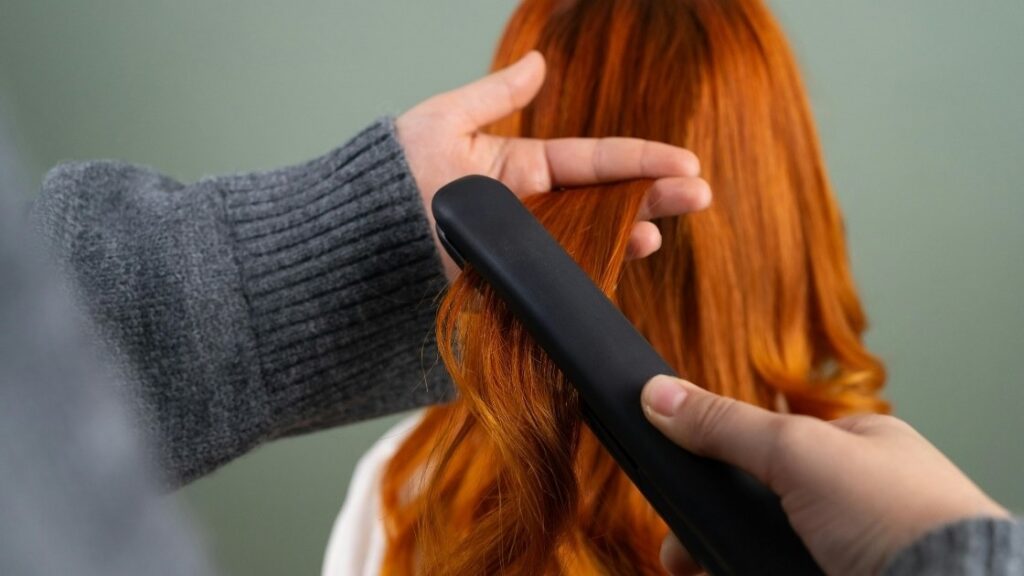
Castor oil reaches this threshold at approximately 392°F (200°C). Most professional flat irons operate between 350°F and 450°F, and many curling wands reach 430°F. This creates a narrow window where the oil can genuinely help and a wide danger zone where it cannot.
Natural Oil Smoke Point Comparison
| Oil | Smoke Point | Best Suited For | Key Advantage |
| Coconut Oil | ~350°F (177°C) | Fine, thin strands | Penetrates deep into shaft |
| Castor Oil | ~392°F (200°C) | Thick, coarse textures | Heavy-duty moisture seal |
| Grapeseed Oil | ~420°F (216°C) | Curly, coarse hair | Lightweight cuticle lock |
| Argan Oil | ~420°F (216°C) | Medium-density hair | Rich antioxidant defense |
| Almond Oil | ~430°F (221°C) | All types | Fast absorption, no weight |
| Shea Butter | ~450°F (232°C) | Natural, textured hair | Mimics silicone barrier |
| Avocado Oil | ~520°F (271°C) | All densities | Highest natural heat ceiling |
Data compiled from Gisou and Keyoma Health
Thermal Risk by Styling Tool Type
Different tools operate at different heat ranges, which directly affects whether castor oil can offer meaningful protection.
| Styling Tool | Typical Temperature Range | Castor Oil Effective? | Notes |
| Blow Dryer | 125–200°F (52–93°C) | Yes fully effective | Well below smoke point |
| Hooded Dryer | 150–220°F (65–104°C) | Yes fully effective | Gentle, even distribution |
| Curling Iron | 250–430°F (121–221°C) | Partially low settings only | Reduce to 350°F max |
| Flat Iron | 300–450°F (149–232°C) | Partially low settings only | Never exceed 380°F with oil |
| Hot Comb / Press | 300–500°F (149–260°C) | No exceeds limit | Use commercial spray instead |
This table makes one thing clear: castor oil as heat protectant works reliably for blow drying and low-temperature curling. For flat ironing and pressing at high settings, it must be layered with a silicone-containing thermal spray or replaced entirely.
5 Evidence-Backed Benefits for Pre-Styling Use
When applied within its effective temperature range, castor oil delivers advantages that most synthetic products cannot replicate.
Board-certified dermatologist Dr. Hadley King, quoted by The Treatment Rooms London, confirmed that the oil’s ricinoleic acid provides both anti-inflammatory and moisturizing properties that support scalp and strand health even though direct growth evidence remains anecdotal.
- Seals moisture inside the cortex The thick molecular weight creates a hygroscopic film that slows water evaporation during moderate-heat exposure, preserving internal hydration throughout the styling session.
- Smooths cuticle edges and controls frizz As reported by Gisou, ricinoleic acid helps rebalance scalp pH and flatten lifted cuticle scales, improving light reflection for visible post-styling shine.
- Reduces breakage through improved elasticity The omega-9 and omega-6 fatty acid profile strengthens the outer hair shaft, minimizing snap-off damage and split-end formation from repeated tool contact.
- Delivers antimicrobial scalp protection According to Medical News Today, reviewed by Dr. Cynthia Cobb (DNP, APRN), the oil possesses antifungal and antibacterial properties that help maintain a healthy scalp environment particularly important when heat and sweat combine during styling.
- Supports follicle-level circulation Research cited by Traya Health suggests ricinoleic acid may stimulate prostaglandin E2 production, potentially enhancing blood flow to hair follicles and supporting keratin synthesis over time.
Hair Porosity: A Factor Most Guides Ignore
Your hair’s porosity level how easily it absorbs and retains moisture significantly impacts how castor oil performs as a pre-styling treatment.
Low-porosity hair has tightly sealed cuticle layers that resist moisture penetration. Castor oil’s heavy viscosity can sit on top of these strands without absorbing, creating a greasy coating that smokes when heated. If your hair beads water droplets rather than absorbing them quickly, dilute the oil heavily (1 part castor to 3 parts grapeseed) and apply to damp hair only.
High-porosity hair often caused by previous chemical or heat damage has open, lifted cuticles that absorb oil rapidly but also lose moisture fast. Castor oil excels here because its thick consistency fills gaps in the cuticle, sealing hydration inside and providing a substantial protective layer before moderate-temperature styling.
Medium-porosity hair responds well to standard application amounts without dilution.
Jamaican Black Castor Oil vs. Regular: Does It Matter for Heat Defense?
This question appears frequently in natural hair communities, so it deserves a direct answer.
According to a detailed comparison by The Hair Fuel, both oil types share the same active compound ricinoleic acid in virtually identical concentrations. The difference lies in processing: Jamaican Black Castor Oil (JBCO) is made by roasting castor beans before pressing, which introduces ash and raises the oil’s alkalinity. Regular cold-pressed castor oil skips roasting entirely, resulting in a lighter color and milder scent.
| Feature | Regular Cold-Pressed Castor Oil | Jamaican Black Castor Oil |
| Processing | Raw beans cold-pressed | Beans roasted, then pressed |
| Color | Pale yellow, clear | Dark brown to black |
| pH Level | ~5.8 (slightly acidic) | ~6.5 (more alkaline) |
| Consistency | Thick | Thicker due to ash content |
| Ricinoleic Acid | 85–90% | 85–90% |
| Heat Protection Difference | None documented | None documented |
The Hair Fuel’s analysis concluded that JBCO does not outperform regular castor oil for hair growth or protection. The choice comes down to personal preference in texture, scent, and how your scalp responds to the slightly higher alkalinity of the roasted version.
DIY Castor Oil Thermal Spray Recipe
For users who prefer a sprayable format over direct oil application, this simple blend offers easier distribution and lighter coverage.
Ingredients: 1 tablespoon cold-pressed castor oil, 2 tablespoons grapeseed or argan oil, ¾ cup distilled water.
Method: Combine all ingredients in a clean spray bottle. Shake vigorously before each use since oil and water separate naturally. Mist evenly onto damp, freshly washed hair from mid-length to ends. Allow five minutes of absorption time before styling at temperatures no higher than 380°F.
This diluted format works particularly well for fine and low-porosity hair types that cannot tolerate pure castor oil without becoming weighed down.
Castor Oil vs. Silicone-Based Heat Protectants
This is the comparison most searchers ultimately need to make. Here is a side-by-side breakdown.
| Factor | Castor Oil | Silicone Spray (Dimethicone) |
| Maximum Heat Defense | ~392°F (200°C) | 450°F+ (232°C+) |
| Moisture Delivery | Excellent deep hydration | Minimal surface coating only |
| Scalp Nourishment | Anti-inflammatory, antimicrobial | None |
| Weight on Hair | Heavy can flatten fine strands | Lightweight suits all types |
| Long-Term Hair Health | Nourishing with repeated use | Potential buildup over time |
| Wash-Out Ease | Requires multiple shampoos | Rinses out easily |
| Cost | Very affordable | Moderate to expensive |
| Best Use Case | Pre-styling moisture base | High-heat thermal shield |
Cosmetic scientist Erica Douglas (Sister Scientist) explained to NaturallyCurly that the most effective approach combines three elements: a moisturizer to retain water, a lightweight polymer to prevent cuticle cracking, and a thermal-resistant surface coating. Castor oil provides only moisture and coating silicone sprays fill the polymer and thermal-resistance gaps.
The smartest strategy layers both: apply castor oil first as a nourishing base, then mist a silicone thermal spray over the top for maximum defense across all temperature ranges.
Application Guide: Getting It Right by Hair Type
Proper technique prevents greasy buildup and ensures the oil sits where it can actually protect.
Start with freshly shampooed, damp hair never apply to unwashed strands carrying product residue. Warm two to five drops (adjusted for density) between your palms. Work the oil through mid-lengths and ends only, keeping it entirely away from the root zone. Distribute evenly using a wide-tooth comb. Wait five to ten minutes for absorption before picking up any heated tool.
Dosage Table by Hair Density
| Hair Type | Amount | Dilution | Max Safe Tool Temperature |
| Fine / Low Porosity | 2–3 drops | Required 1:3 with lighter oil | 350°F (177°C) |
| Medium / Normal | 4–5 drops | Optional | 380°F (193°C) |
| Thick / Coarse | Dime-sized | Not needed | 390°F (199°C) |
| Curly / High Porosity | Dime to nickel | Blend with jojoba for spread | 380°F (193°C) |
What This Oil Cannot Do: Honest Limitations
Castor oil as heat protectant has a firm ceiling, and pretending otherwise risks real damage.
It cannot protect at temperatures above 392°F. It cannot reverse existing keratin denaturation once heat has structurally altered the protein, that damage is permanent and can only be resolved by cutting, as confirmed by research cited by Typology. It weighs down fine hair. It requires thorough shampooing to remove. And when used above its smoke point, it generates free radicals that actively harm the cuticle rather than shield it.
Reach for a dedicated commercial thermal spray instead when your tools exceed 400°F, when you style more than twice weekly, when you have fine or oily strands, or when you need a fast-drying, lightweight formula.
Conclusion
Castor oil as heat protectant earns a legitimate place in any natural styling routine as long as you respect its boundaries. The scientific evidence supports its exceptional moisture-sealing, cuticle-smoothing, and antimicrobial properties when used within a moderate temperature range. Peer-reviewed studies from PubMed and Hiroshima University confirm that no oil can undo keratin damage once it has occurred, making prevention not repair the only viable strategy.
The most effective approach is a layered one. Apply castor oil as a nourishing moisture base, then add a silicone-containing thermal spray for high-heat sessions. This gives your strands the deep conditioning of a centuries-old remedy paired with the proven thermal resistance of modern cosmetic chemistry.
If this guide helped clarify your styling decisions, share it with someone exploring natural heat protection alternatives or leave a comment describing how castor oil fits into your own routine.
Related reading on Dermology Hub: Best Heat Damage Repair Secrets | Color Proof Blow Dry Spray Guide
Is castor oil a good heat protectant for natural hair?
This oil works effectively on natural, coily, and textured strands when styling tools stay below 390°F. Its thick consistency creates a moisture barrier that lighter oils cannot match. For temperatures beyond that threshold, layering it beneath a formulated thermal spray provides more complete strand defense.
What happens if I flat iron over castor oil at high heat?
When heated past its smoke point of approximately 392°F, the oil decomposes and releases free radicals and acrolein both of which damage the cuticle rather than protect it. You may notice smoking, an unpleasant smell, and increased dryness or brittleness after styling.
Which is better for heat styling Jamaican Black or regular castor oil?
Both contain the same active compound (ricinoleic acid) at nearly identical concentrations, and no published evidence shows either version outperforms the other for thermal defense. JBCO has a slightly higher alkalinity due to its roasting process, which may help open cuticles for better absorption, but the heat protection ceiling remains the same.
Can I use castor oil instead of a heat protectant spray?
You can substitute it for low-heat styling like blow drying (125–200°F) with confidence. For flat ironing or curling above 380°F, castor oil alone is insufficient it lacks the silicones and lightweight polymers that commercial sprays use to resist extreme temperatures without decomposing.
Does hair porosity affect how well this oil protects from heat?
Significantly. High-porosity hair absorbs the oil quickly and benefits most, since the oil fills cuticle gaps and seals in moisture. Low-porosity hair repels the oil, causing it to sit on the surface where it can smoke under heat. Diluting with a lighter carrier oil and applying to damp hair helps low-porosity types absorb the product more effectively.
How do I wash castor oil out after heat styling?
The thick viscosity requires at least two rounds of gentle sulfate-free shampooing to fully remove. Applying shampoo to dry hair before wetting (a technique called pre-poo cleansing) helps emulsify the oil more effectively than lathering on wet strands. Follow with a lightweight conditioner to restore softness without residue.