
Did you know that certain biotin rich fruits can dramatically accelerate keratin production and transform your hair, skin, and nail health from the inside out? While most people immediately reach for synthetic supplements, nature provides an extraordinary lineup of vitamin B7 food sources that deliver biotin alongside complementary antioxidants, fiber, and essential micronutrients your body craves.
This dermatologist verified guide dives deep into the science behind biotin rich fruits, explaining exactly which fruits contain the highest biotin concentration per serving and how their unique nutritional profiles support hair follicle nourishment at the cellular level. We explore the biological mechanisms behind biotin absorption from natural sources versus isolated supplements and why clinical nutritionists increasingly recommend dietary biotin intake as the preferred foundation.
Whether you are battling thinning hair, brittle nails, or dull skin, understanding which biotin rich fruits belong in your daily rotation can make a measurable difference. We also cover optimal fruit combinations for enhanced biotin bioavailability and address common misconceptions surrounding natural vitamin B7 supplementation.
Understanding the Science Behind Biotin in Natural Fruit Sources
Biotin belongs to the B complex vitamin family and functions as an indispensable coenzyme that facilitates carboxylase reactions throughout your metabolic system. When you consume biotin rich fruits, your body absorbs this nutrient through the intestinal lining where it immediately begins participating in fatty acid synthesis, gluconeogenesis, and amino acid catabolism. These biochemical processes collectively support the structural foundation of keratin, which is the protein responsible for maintaining healthy hair strands, resilient nail beds, and vibrant skin tissue.
What separates fruit derived biotin from synthetic alternatives is the presence of complementary phytonutrients that enhance overall biotin bioavailability. Fruits deliver vitamin B7 food sources alongside vitamin C, polyphenols, and dietary fiber that create a synergistic absorption environment your digestive system prefers. Clinical nutritionists frequently highlight this advantage when recommending dietary biotin intake over isolated capsule supplementation.
Historical Discovery and Evolving Nutritional Science
The relationship between fruit consumption and improved integumentary health has been recognized across cultures for centuries, long before biotin was formally identified. Ancient Ayurvedic and Traditional Chinese Medicine practitioners prescribed specific fruits to treat brittle nails and hair thinning without understanding the precise biochemical explanation.
Modern nutritional science began cataloging biotin content in fruits during the mid twentieth century when food composition databases expanded globally. Researchers discovered that while fruits generally contain lower biotin concentrations compared to organ meats and legumes, their superior absorption rates and additional micronutrient profiles make them exceptionally valuable. This historical progression validates why biotin rich fruits remain relevant in contemporary dermatological dietary recommendations.
Top Performing Fruits With the Highest Biotin Content
Not all fruits deliver equal amounts of vitamin B7, and understanding which varieties provide the most significant concentrations empowers you to make strategic dietary decisions. Dermatologists and registered dietitians consistently recommend a diverse rotation rather than relying on a single source.
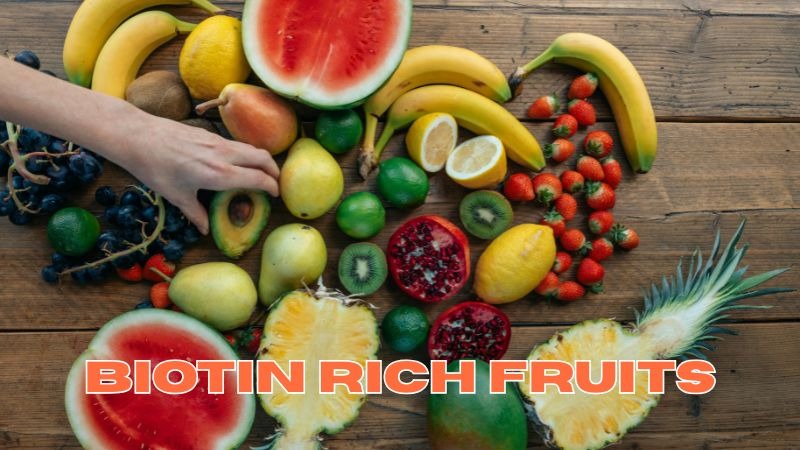
Bananas rank among the most accessible biotin rich fruits available worldwide. A single medium banana provides approximately 0.2 micrograms of biotin alongside potassium, magnesium, and prebiotic fiber that supports gut microbiome health. This is particularly relevant because emerging research connects intestinal bacterial balance with enhanced biotin absorption from natural sources.
Avocados deliver one of the highest biotin concentrations found in any fruit, offering roughly 1.85 micrograms per serving. Their healthy monounsaturated fat content simultaneously supports fat soluble nutrient transport, creating an ideal internal environment for hair follicle nourishment and cellular repair mechanisms.
Berries and Their Unique Biotin Delivery Advantage
Raspberries, strawberries, and cranberries represent an often overlooked category of biotin rich fruits that provide exceptional nutritional density per calorie. Raspberries alone contain approximately 0.2 micrograms of biotin per cup while simultaneously delivering ellagic acid and anthocyanins that protect hair follicles from oxidative stress damage.
Strawberries contribute meaningful vitamin B7 food sources alongside extraordinarily high vitamin C content. This combination is clinically significant because vitamin C supports collagen synthesis that works alongside keratin production to strengthen hair shaft integrity and nail plate resilience. Incorporating berries into your morning routine provides compounding benefits that extend well beyond basic biotin supplementation.
Practical Benefits of Choosing Fruits Over Synthetic Supplements
Transitioning toward fruit based dietary biotin intake offers advantages that capsules simply cannot replicate. The following points outline why dermatologists increasingly advocate for this natural approach.
- Biotin rich fruits provide whole food matrix absorption, meaning your body recognizes and processes the nutrient more efficiently than isolated synthetic versions
- Natural fruit consumption eliminates the risk of biotin interference with laboratory blood tests, a documented concern with high dose supplement protocols
- The accompanying antioxidant content in fruits actively combats free radical damage that accelerates hair thinning and premature skin aging
- Dietary biotin intake through fruits supports sustained blood concentration levels rather than the spike and crash pattern associated with megadose capsules
- Regular fruit consumption simultaneously addresses multiple nutritional deficiencies that contribute to poor integumentary health beyond biotin alone
Challenges and Limitations You Should Honestly Consider
Despite their clear advantages, biotin rich fruits do present certain practical challenges that deserve transparent discussion. The biotin concentration per serving in most fruits remains relatively modest compared to organ meats, egg yolks, and legume sources. Individuals with diagnosed biotin deficiency requiring therapeutic dosing may find it difficult to meet clinical thresholds through fruit consumption exclusively.
Seasonal availability affects access to certain high biotin varieties in specific geographic regions. Raspberries and strawberries may become expensive or difficult to source during winter months, forcing reliance on frozen alternatives that may have slightly diminished micronutrient profiles due to processing and storage duration.
Addressing Biotin Bioavailability Concerns
Another legitimate challenge involves individual variation in biotin bioavailability from fruit sources. Genetic polymorphisms affecting biotinidase enzyme activity can reduce the efficiency with which your body liberates protein bound biotin from natural foods. People with compromised digestive function, including those with inflammatory bowel conditions, may also experience reduced absorption rates that limit the effectiveness of fruit based dietary biotin intake strategies.
Consulting a clinical nutritionist for personalized assessment ensures that your approach to incorporating biotin rich fruits aligns with your unique metabolic requirements. Blood panel analysis measuring serum biotin levels before and after dietary modifications provides objective data for evaluating whether fruit based sourcing meets your individual needs for hair follicle nourishment and keratin production support.
Strategic Fruit Combinations for Enhanced Biotin Absorption
Maximizing the benefits of biotin rich fruits requires intentional pairing strategies that clinical nutritionists frequently recommend to their patients. Combining avocado with citrus fruits creates a powerful absorption environment because the healthy fats in avocado enhance biotin transport while vitamin C simultaneously stimulates collagen synthesis alongside keratin formation.
Adding banana slices to a mixed berry bowl creates another synergistic combination where prebiotic fiber feeds beneficial gut bacteria that produce additional endogenous biotin. This approach effectively multiplies your total biotin availability beyond what any single fruit delivers independently. Watermelon, though rarely discussed in mainstream nutrition content, also provides measurable vitamin B7 food sources when consumed in adequate portions during its peak growing season.
Pairing biotin Rich Fruits fruits with small amounts of nuts or seeds further amplifies biotin bioavailability by introducing complementary fatty acids that support nutrient solubility and intestinal uptake. This whole food philosophy aligns with the dermatological perspective that sustainable integumentary health emerges from comprehensive dietary patterns rather than isolated nutrient fixation. Building a consistent daily rotation of biotin rich fruits alongside diverse whole foods establishes the nutritional foundation your hair, skin, and nails require for long term vitality and resilience.
Conclusion
Nourishing your body with biotin rich fruits represents one of the most effective and sustainable approaches to supporting keratin synthesis, hair follicle nourishment, and overall integumentary wellness. Throughout this guide, we have examined how fruits like avocados, bananas, raspberries, and strawberries deliver vitamin B7 food sources alongside complementary antioxidants and phytonutrients that isolated supplements simply cannot replicate.
Understanding biotin bioavailability, strategic fruit combinations, and individual absorption variations empowers you to make informed dietary decisions rather than relying on marketing claims. Clinical nutritionists and dermatologists continue emphasizing that dietary biotin intake through whole food sources establishes a stronger metabolic foundation than synthetic alternatives alone.
While biotin rich fruits may not replace therapeutic supplementation for individuals with diagnosed deficiencies, they undeniably serve as a powerful nutritional cornerstone. Committing to a consistent daily rotation of these natural vitamin B7 sources positions your hair, skin, and nails for lasting strength and vitality.