
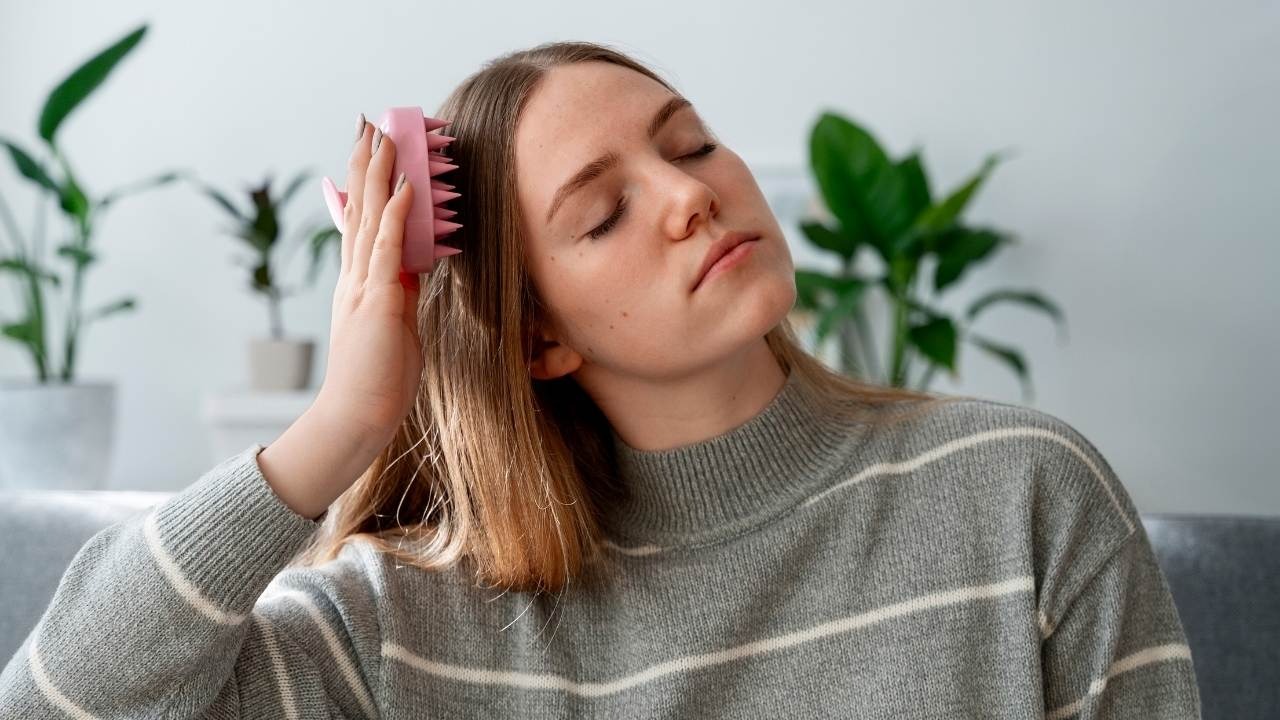
Chronic scalp tension is that stubborn, squeezing sensation across the skull that simply refuses to ease up, no matter how often you massage your temples or stretch your neck. Millions of adults describe it as a tight invisible cap, a constant pressure band, or a raw soreness running from forehead to nape.
What surprises most sufferers is that the problem rarely originates inside the head at all. The tightness usually lives in the muscle layer covering the cranium a thin sheet of tissue called the galea aponeurotica along with its connected forehead, temple, and occipital muscles.
According to the Cleveland Clinic, tension-type head pain affects the majority of adults at some point, and the musculoskeletal version lingers far longer than a standard headache when left unaddressed.
Table of Contents
What Does Ongoing Scalp Tightness Actually Feel Like?
Descriptions vary, but patterns repeat. Some people report a dull band pressing across the forehead. Others feel aching pressure above the ears, at the crown, or at the base of the skull. A subset notices the discomfort mostly when touching or brushing their hair.
This last symptom has a clinical name: trichodynia, sometimes called “painful hair syndrome.” Research published in the Journal of the American Academy of Dermatology has linked trichodynia to scalp inflammation, emotional stress, and underlying myofascial strain often appearing side-by-side with hair thinning or telogen effluvium.
The scalp itself may become hypersensitive, making hats, headbands, and even glasses uncomfortable to wear. This heightened sensitivity is frequently misread as a skin issue when the real culprit sits underneath, in the muscle layer.
How It Differs From Migraines and Other Head Conditions
One of the reasons persistent scalp tightness is mismanaged is simple misdiagnosis. Here’s how clinicians typically distinguish it from lookalike conditions.
| Condition | Pain Type | Location | Key Differentiator |
| Muscular Scalp Tightness | Steady, dull, pressure-like | Forehead, temples, crown | Tender to touch, no nausea |
| Migraine | Throbbing, pulsing | One-sided usually | Light sensitivity, nausea |
| Cluster Headache | Sharp, burning | Around one eye | Short severe attacks |
| Occipital Neuralgia | Shooting, electric | Base of skull | Triggered by neck movement |
| Cervicogenic Headache | Dull, referred | Neck to head | Originates from cervical spine |
| Tension Headache | Tight, band-like | Both sides | Often linked with scalp tension |
The International Classification of Headache Disorders (ICHD-3), published by the International Headache Society, uses these distinctions to guide diagnosis and treatment planning for head-related complaints.
Root Causes of Persistent Cranial Muscle Tightness
Rarely is there a single culprit. Most sufferers are dealing with three or four overlapping triggers feeding into one stubborn cycle.
- Forward-head posture and “tech neck” Harvard Health Publishing points out that spending hours peering at phones or laptops shifts the head several inches ahead of the shoulders, overloading the suboccipital muscles and pulling the scalp fascia taut.
- Emotional stress and chronic anxiety The American Psychological Association reports that prolonged stress keeps facial, jaw, and scalp muscles in a low-level contraction state, eventually “forgetting” how to fully relax.
- Nighttime teeth grinding (bruxism) Mayo Clinic experts note that clenching during sleep strains the temporalis muscles on either side of the head, radiating tightness upward into the scalp.
- Repetitive tight hairstyles Dermatologists publishing in the Journal of the American Academy of Dermatology have linked constant ponytails, buns, and braids to follicular inflammation and traction alopecia.
- Digital eye strain Squinting at screens without blue-light breaks overworks the frontalis muscle across the forehead, a well-documented contributor to tension-type head discomfort.
- Dehydration and poor sleep Johns Hopkins Medicine highlights that insufficient rest lowers the pain threshold, while dehydration tightens soft connective tissue throughout the body.
- Hormonal shifts Cyclical changes during menstruation, pregnancy, and menopause affect muscle relaxation responses, explaining why many women notice flare-ups during these phases.
Warning Signs That Warrant Attention
Some symptoms are cues that home care alone may not be enough. Watch carefully for:
- Tenderness that makes ponytails or hats painful
- A creeping or crawling sensation across the scalp (paresthesia)
- Tightness that intensifies as the day progresses
- Accompanying neck, shoulder, or jaw stiffness
- Sore hair roots or unexplained shedding
- Pain that wakes you from sleep
- Pressure that lingers longer than four weeks despite self-care
When these signs persist, consultation with a dermatologist or neurologist becomes essential to rule out occipital neuralgia, cervicogenic headaches, or scalp inflammatory disorders.
Science-Backed Treatments That Actually Deliver Results
The most effective approach blends daily self-care with professional help when symptoms persist. Here’s what the evidence supports.
Targeted Scalp Massage
A 2016 clinical study published in Eplasty found that participants performing standardized scalp massage for 24 weeks reported both thicker hair and noticeably reduced scalp discomfort. Slow, circular fingertip pressure for 5–10 minutes daily enhances blood flow and gradually loosens the fascia.
Heat and Cold Therapy
The American Migraine Foundation notes that temperature therapy remains one of the simplest non-drug tools for head tension. Warm compresses on the nape relax contracted fibers, while cool packs on the temples reduce inflammation and soothe sensitive areas.
Stress Management and Mind-Body Work
The National Center for Complementary and Integrative Health reports that meditation, yoga, and slow breathing exercises measurably reduce stress-driven muscle contraction. These practices interrupt the nervous system’s fight-or-flight loop that keeps scalp muscles locked tight.
Posture Correction and Ergonomics
Raising your monitor to eye level, switching to an ergonomic chair, and pausing every 30 minutes for neck rolls addresses the physical root of ongoing head pressure. Physical therapists often recommend the “chin tuck” exercise to retrain alignment.
Medical Interventions for Stubborn Cases
For those who don’t respond to lifestyle changes, options expand considerably. Trigger-point injections, botulinum toxin (Botox), and myofascial release therapy are supported by clinical data for refractory tension-type head conditions. Anyone living with long-term chronic scalp tension and minimal relief from home care should discuss these with a neurologist or pain specialist.
Sleep Optimization and Hydration
Adults should aim for seven to nine hours of quality rest, according to the National Sleep Foundation. Pairing good sleep hygiene with 2–3 liters of daily water intake reduces both muscle rigidity and pain perception.
A Simple Two-Minute Daily Reset Routine
Consistency outperforms intensity every time. Try this quick sequence morning and evening:
- Slow neck rolls, four in each direction
- Fingertip scalp massage from hairline to nape
- Gentle shoulder shrugs paired with deep exhales
- Three diaphragmatic breaths to close
Small rituals repeated daily retrain the nervous system to release tight muscles automatically over time.
Special Populations and Unique Triggers
Desk Workers and Remote Employees
The CDC highlights that sedentary work patterns contribute significantly to musculoskeletal complaints. Standing desks, blue-light glasses, and hourly micro-breaks are simple, effective countermeasures.
Women During Hormonal Transitions
According to the North American Menopause Society, fluctuating estrogen levels affect muscle relaxation and pain sensitivity, which is why tightness often spikes during perimenopause and menstruation.
Athletes and Weightlifters
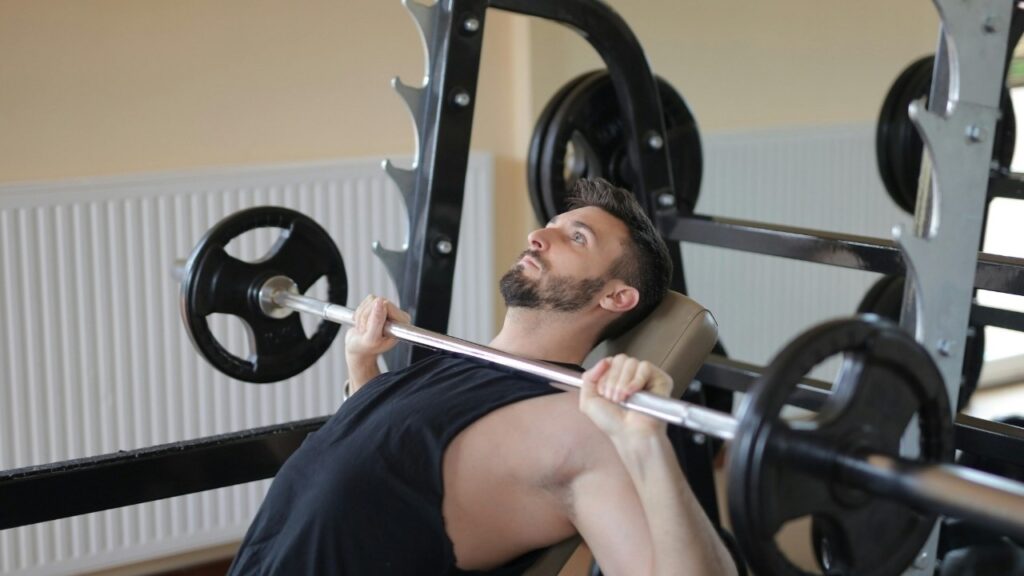
Heavy lifting with poor breath control can trigger temporal and occipital muscle strain. Proper breathing technique during exertion prevents this ripple effect into the scalp region.
People with Anxiety Disorders
The APA has repeatedly emphasized the scalp-stress connection. Those with generalized anxiety benefit most from pairing physical care with cognitive behavioral therapy (CBT) for lasting results.
When to See a Doctor
Schedule a professional evaluation if any of the following apply:
- Tightness persists beyond four weeks despite home care
- You experience vision changes, numbness, or sudden severe pain
- Scalp pain disrupts sleep or daily focus
- You notice unexplained hair shedding alongside the discomfort
- Over-the-counter pain relief provides no benefit
Early assessment rules out conditions like temporal arteritis, scalp psoriasis, or nerve compression that require specific treatment paths.
Conclusion
Long-term head and scalp tightness is rarely mysterious once you map out the triggers. Posture habits, accumulated stress, jaw tension, and hairstyling choices are the usual suspects and the good news is that each one responds remarkably well to consistent, simple interventions.
Relief from chronic scalp tension becomes achievable when you combine daily scalp massage, smart posture adjustments, stress reduction, and, when needed, professional care. Patience matters. Most people experience meaningful improvement within two to four weeks of steady practice, and lasting freedom from discomfort follows within a few months.
Your turn: Which trigger do you suspect is driving your scalp tightness? Share your experience in the comments, forward this guide to someone who might benefit, and tell us which relief technique made the biggest difference in your routine. Your insight could be exactly what another reader needs to finally break the cycle.
1. Can emotional stress actually cause long-term scalp tightness?
Absolutely. The American Psychological Association confirms that prolonged stress keeps facial and scalp muscles in a near-constant state of contraction, eventually creating a self-sustaining tension loop. Consistent relaxation practices typically resolve this within a few weeks.
2. How long before I feel noticeable relief?
Most people experience measurable improvement within two to four weeks of daily self-care. Cleveland Clinic guidance suggests that muscular head discomfort responds well to steady massage, posture correction, and stress management over time.
3. Is it normal for my hair to hurt at the roots?
Yes, and the condition has a name: trichodynia. Dermatologists connect it to scalp inflammation, tight hairstyles, and underlying muscular strain. Switching to looser hairstyles and gentle scalp massage often eases the sensation within weeks.
4. When should I consult a healthcare professional?
Book an appointment if the tightness lasts over four weeks, interferes with sleep, or appears alongside vision changes, numbness, or sudden severe pain. Conditions like occipital neuralgia and migraines can mimic muscular tightness and require targeted treatment.
5. Can my hairstyle genuinely worsen the problem?
Definitely. The American Academy of Dermatology warns that repeatedly tight ponytails, braids, and buns pull on follicles and scalp fascia, which can lead to traction alopecia and ongoing soreness. Rotating looser styles gives the scalp time to recover.
6. Does scalp massage really help or is it just relaxing?
It does both, actually. Research in Eplasty has shown that daily scalp massage improves circulation, reduces muscular tightness, and can even enhance hair thickness over months. Even a brief five-minute session makes a measurable difference.
7. Is chronic scalp tightness connected to hair loss?
Sometimes. When inflammation and muscular pressure persist, they can affect follicle health and contribute to telogen effluvium or stress-related shedding. Addressing the tightness often slows or reverses the shedding pattern.