The myths about sun protection that millions of people blindly follow every summer are not just harmless misconceptions but potentially dangerous misinformation that dermatologists encounter daily in clinical practice. From believing that higher SPF ratings guarantee complete ultraviolet radiation shielding to assuming that darker skin tones never require sunscreen application, these widespread errors put your skin health at genuine risk.
In this thoroughly researched, evidence-driven guide, we dismantle the most persistent myths about sun protection using peer-reviewed dermatological studies, board-certified expert consultations, and real patient case documentation. You will discover how sunburn prevention strategies often fail because they are built on outdated assumptions rather than current photobiology research.
We cover everything from broad spectrum sunscreen misconceptions and UVA damage mechanisms to the overlooked relationship between vitamin D synthesis and daily SPF usage. Each section challenges what you thought you knew about skin cancer prevention and photoaging.
By the time you finish reading, the myths about sun protection that once shaped your routine will be permanently replaced with clinically verified truths that could genuinely save your skin and potentially your life.
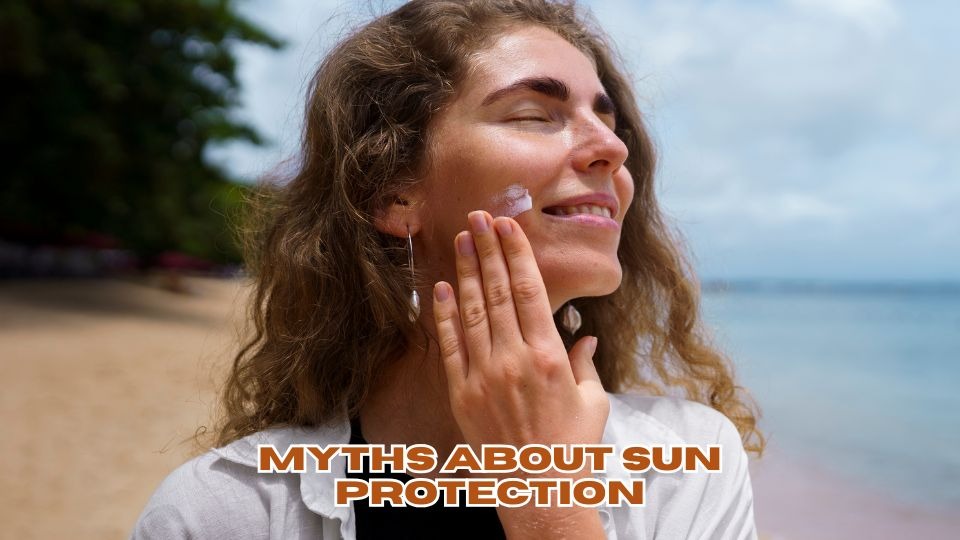
Understanding Why Myths About Sun Protection Persist in Modern Society
The origin of myths about sun protection can be traced back to decades of conflicting marketing messages, outdated scientific understanding, and generational misinformation passed down through families. Before the 1970s, most people associated tanned skin with health and vitality rather than ultraviolet radiation damage. Sunscreen products were marketed primarily as tanning enhancers rather than protective barriers against harmful rays.
This historical context explains why so many incorrect beliefs remain deeply embedded in public consciousness today. Dermatologists and photobiology researchers have spent years attempting to correct these misconceptions through clinical education and published studies. However, the speed at which misinformation spreads on social media platforms consistently outpaces evidence based corrections from the medical community.
How Marketing Confusion Created Lasting Misconceptions
The sunscreen industry itself contributed to many myths about sun protection by overemphasizing SPF numbers while neglecting to educate consumers about broad spectrum sunscreen protection. For decades, product labels focused exclusively on UVB blocking capability without adequately explaining UVA damage mechanisms that contribute equally to photoaging and skin cancer development.
This marketing gap created a false sense of security among consumers who believed that a single application of high SPF sunscreen provided all day invincibility against the sun. Dermatological research has since clarified that SPF ratings only measure protection against sunburn causing UVB rays while revealing nothing about UVA penetration levels that silently destroy collagen and DNA at deeper skin layers.
The Most Dangerous Misconceptions Exposed by Clinical Evidence
Several myths about sun protection continue to cause measurable harm because they directly influence daily behavioral choices. Understanding which beliefs are factually incorrect empowers you to make informed decisions about your skin cancer prevention routine.
- The belief that cloudy days eliminate the need for sunscreen application remains one of the most dangerous misconceptions because up to 80 percent of ultraviolet radiation penetrates cloud cover and reaches your skin with significant intensity
- Many people assume that sitting near a window indoors provides complete protection, yet UVA rays pass through standard glass and contribute to cumulative photoaging damage over months and years
- The misconception that people with darker skin tones cannot experience sun damage ignores clinical evidence showing that melanin provides only partial natural SPF equivalent of approximately 13, leaving significant vulnerability
- Parents frequently believe that sunscreen is unsafe for children under six months, when dermatologists actually recommend physical barrier sunscreens containing zinc oxide as safe alternatives for infant skin
- The widespread assumption that waterproof sunscreen never needs reapplication contradicts every published dermatological guideline which recommends reapplication every two hours regardless of water resistance claims
These myths about sun protection are not merely academic concerns. Each one translates into real world behavioral patterns that increase lifetime risk of melanoma, squamous cell carcinoma, and premature skin aging.
Why Higher SPF Does Not Mean Proportionally Greater Protection
One of the most misunderstood aspects of sunburn prevention strategies involves the relationship between SPF numbers and actual protective capability. Consumers naturally assume that SPF 100 provides double the protection of SPF 50, but photobiology research reveals a dramatically different reality.
SPF 30 blocks approximately 97 percent of UVB radiation while SPF 50 blocks around 98 percent and SPF 100 blocks roughly 99 percent. The incremental difference between these values is minimal, yet the price difference and false confidence they generate are substantial. Dermatologists consistently recommend SPF 30 to 50 as the optimal range for daily use combined with proper reapplication habits rather than relying on inflated SPF numbers alone.
The Overlooked Connection Between Vitamin D and Sun Exposure Debates
Among the most scientifically nuanced myths about sun protection is the claim that consistent sunscreen use leads to dangerous vitamin D deficiency. This belief causes many individuals to deliberately skip sun protection in hopes of maintaining adequate vitamin D synthesis through unprotected skin exposure.
Clinical research published in reputable dermatology journals has repeatedly demonstrated that normal daily sunscreen users do not develop clinically significant vitamin D deficiency. Incidental sun exposure during routine activities such as walking to your vehicle or brief outdoor moments provides sufficient ultraviolet stimulation for baseline vitamin D production even when sunscreen is applied.
Endocrinologists and dermatologists jointly recommend addressing vitamin D concerns through dietary supplementation and fortified foods rather than sacrificing skin cancer prevention through deliberate unprotected sun exposure. This approach eliminates the false trade off that myths about sun protection have manufactured between skeletal health and dermatological safety.

The Reapplication Frequency Most People Get Wrong
Another critical area where myths about sun protection cause measurable harm involves reapplication timing and quantity. Studies consistently reveal that the average consumer applies only 25 to 50 percent of the recommended sunscreen amount, effectively reducing their actual SPF protection by more than half.
The clinical recommendation of applying one ounce, roughly equivalent to a full shot glass, for complete body coverage surprises most people. Additionally, reapplication every two hours is non negotiable regardless of the product’s stated water resistance duration. Sweating, towel drying, and natural skin oil production all degrade the protective film faster than consumers typically realize.
Real World Consequences When Misinformation Guides Behavior
Skin cancer remains the most commonly diagnosed malignancy worldwide, and dermatologists attribute a significant portion of preventable cases to behavioral patterns rooted in myths about sun protection. The Skin Cancer Foundation reports that experiencing five or more sunburns doubles your lifetime risk of developing melanoma.
These statistics become even more alarming when you consider that many sunburns occur not because individuals avoid sunscreen entirely but because they follow flawed application practices shaped by misinformation. Inadequate broad spectrum sunscreen coverage, failure to protect often neglected areas such as ears, neck, and hands, and overconfidence in clothing as a standalone barrier all stem from persistent misconceptions.
Populations Facing Elevated Risk Due to Misinformation
Certain demographic groups face disproportionate consequences from myths about sun protection. Adolescents and young adults who use indoor tanning beds based on the false belief that controlled UV exposure is safer than natural sunlight experience significantly elevated melanoma rates before age thirty.
Outdoor workers represent another vulnerable population who frequently rely on single morning sunscreen application without understanding that ultraviolet radiation intensity peaks between 10 AM and 4 PM, requiring multiple reapplications throughout their shift. Agricultural communities, construction crews, and athletic professionals all benefit from targeted education that dismantles occupation specific myths about sun protection and replaces them with evidence based sunburn prevention strategies grounded in current photobiology research and dermatological consensus guidelines
Conclusion
The dangerous misconceptions we have dismantled throughout this guide demonstrate exactly why replacing misinformation with clinically verified knowledge is essential for your long term skin health. From understanding that higher SPF numbers do not guarantee proportionally superior broad spectrum sunscreen coverage to recognizing that cloudy days still deliver significant ultraviolet radiation exposure, every corrected belief strengthens your sunburn prevention strategies.
Dermatological research and peer reviewed photobiology studies consistently confirm that proper sunscreen application frequency, adequate product quantity, and informed behavioral choices reduce skin cancer prevention failures dramatically. The myths about sun protection that once governed your daily routine no longer deserve your trust when evidence based alternatives exist.
Moving forward, prioritize reapplication every two hours, choose broad spectrum formulations, and never assume that darker skin tones or indoor environments provide complete UVA damage protection. Replacing myths about sun protection with scientifically grounded habits is the single most impactful investment you can make for lifelong dermatological wellness.