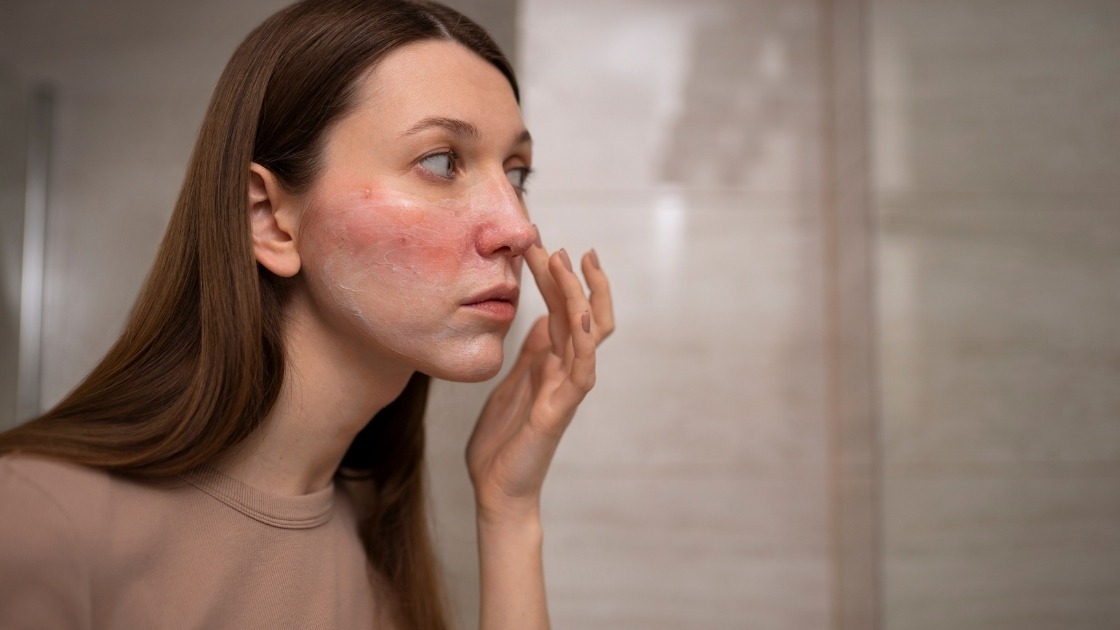
Quick Answer: Circular eczema on face clinically called nummular or discoid eczema produces coin-shaped itchy patches that often mimic ringworm. It is not contagious, responds well to emollients and prescription topicals, and usually improves with dermatologist-guided care.
Waking up to round, inflamed patches on your cheeks or forehead can feel alarming. Many people instinctively suspect a fungal rash or a stubborn acne flare. In reality, these disc-like lesions often point to a specific inflammatory skin condition known as nummular dermatitis, and facial presentation happens to be one of the trickier forms to manage.
This guide walks you through what dermatologists want every patient to understand backed by clinical sources and trusted dermatology associations.
Table of Contents
What Is Nummular Eczema on the Face?
The term nummular traces back to the Latin word “nummus,” meaning coin an apt label for the round, slightly raised lesions that define this condition. According to the Cleveland Clinic, these patches can itch intensely, weep clear fluid, and form a dry crust as they evolve.
Unlike a fungal rash, nummular dermatitis is a non-contagious inflammatory reaction tied to skin-barrier dysfunction. You cannot catch it through shared towels, pillows, or skin contact.
Facial involvement is less common than limb or torso presentation, which is partly why circular eczema on face is frequently misdiagnosed. The cheeks, jawline, and peri-orbital area are the most affected zones in adults, while infants often develop patches near the chin and forehead.
What Causes Coin-Shaped Eczema on Facial Skin?
Researchers from StatPearls (NIH) describe nummular eczema as a multifactorial condition meaning no single trigger fully explains it. Instead, it typically results from a blend of compromised lipid barrier function, immune overactivity, and environmental stressors.
Key contributors dermatologists commonly identify:
- Persistent xerosis (dry skin), worsened by cold weather or heated indoor air
- Micro-trauma from over-exfoliation, shaving, or aggressive cleansing
- Allergic reactions to fragrances, preservatives, or nickel in cosmetic tools
- Staphylococcus aureus colonization, which the American Academy of Dermatology links to persistent flares
- Emotional stress, which elevates cortisol and weakens the skin barrier
- Underlying atopy a personal or family history of hay fever, asthma, or atopic dermatitis
Research referenced by the National Eczema Association also suggests filaggrin gene mutations which disrupt skin-barrier protein production play a role in many chronic eczema presentations, including nummular variants.
How to Recognize the Patches on Your Face
Facial lesions usually begin as small clusters of papules or tiny fluid-filled bumps. Within days, they merge into round or oval plaques, ranging from one to ten centimeters across. The surface often feels scaly, tight, or slightly leathery, while the border stays sharply defined.
Itching can be severe enough to disrupt sleep. Over time, repeated scratching may thicken the skin a change called lichenification and leave behind dark or pale marks known as post-inflammatory pigment shifts.
Nummular Dermatitis vs. Ringworm: A Side-by-Side Comparison
Because both produce round patches, misdiagnosis is common. This quick comparison, drawn from guidance published by the National Eczema Association and AAD, can help you tell the two apart before your appointment:
| Characteristic | Nummular Eczema | Ringworm (Tinea Corporis) |
| Underlying cause | Barrier + immune dysfunction | Dermatophyte fungal infection |
| Contagious | No | Yes |
| Center of lesion | Filled, may ooze or crust | Cleared, with active red rim |
| Itch severity | Intense, often disruptive | Mild to moderate |
| Scaling pattern | Uniform across patch | Ring-edged |
| Primary treatment | Emollients, topical steroids | Antifungal creams or oral agents |
A dermatologist can usually confirm the diagnosis using a simple KOH prep or skin scraping, ruling out tinea within minutes.
Evidence-Based Treatment Options
Facial skin is thinner, more vascular, and more reactive than skin elsewhere, so treatment calls for precision rather than aggression.
According to Mount Sinai Dermatology and published StatPearls clinical guidelines, the first-line approach typically involves low-potency topical corticosteroids such as hydrocortisone 1% or desonide applied in short courses to reduce inflammation. For longer-term facial control, non-steroidal topical calcineurin inhibitors like tacrolimus 0.03% or pimecrolimus are often preferred, since they avoid the skin-thinning associated with prolonged steroid use.
Moisturization remains the cornerstone of treatment. Thick, fragrance-free ceramide-rich creams applied within three minutes of cleansing help restore the lipid matrix and reduce transepidermal water loss a concept dermatologists refer to as barrier repair.
For moderate-to-severe or resistant cases, narrowband UVB phototherapy or systemic agents such as dupilumab (an injectable biologic approved for chronic eczema) may be considered after specialist evaluation.
When circular eczema on face becomes secondarily infected signaled by yellow crusting, pus, or sudden worsening the AAD advises a short course of topical or oral antibiotics targeting staphylococcal species.
Daily Facial Skincare for Eczema-Prone Skin
Small routine changes often prevent the next flare. Cleanse once daily using a non-foaming, pH-balanced cleanser, and avoid hot water that strips natural oils. Pat skin dry, then apply a ceramide or colloidal oatmeal cream immediately while the skin is still damp. Skip retinoids, alpha hydroxy acids, essential oils, and alcohol-based toners until patches resolve fully. A mineral (zinc oxide) sunscreen is essential daily inflamed skin is especially prone to pigment changes after sun exposure.
Indoor humidity matters too. Running a cool-mist humidifier overnight during winter helps maintain ambient moisture and reduces nighttime itching.

Special Considerations: Children, Pregnancy, and Recurrence
Young children sometimes develop circular eczema on face near the mouth and cheeks, often worsened by drool, teething, or food residue. Pediatric dermatologists typically recommend barrier ointments like petrolatum alongside mild topical steroids for short intervals.
During pregnancy, most systemic eczema medications are restricted, yet topical options such as low-dose hydrocortisone and emollients are generally considered safe always confirm with an obstetrician first.
Recurrence is common. Data summarized by the AAD indicates that undertreated nummular dermatitis frequently returns within months, and many stubborn cases are eventually traced to an underlying contact allergy uncovered through patch testing.
When to Consult a Board-Certified Dermatologist
If circular eczema on face persists beyond three to four weeks of consistent home care, spreads rapidly, oozes pus, or keeps returning, book a specialist appointment. A dermatologist can distinguish nummular dermatitis from look-alike conditions psoriasis, mycosis fungoides, subacute lupus, or granuloma annulare and order patch testing if an allergic trigger is suspected.
Conclusion: Take Control of Your Skin Barrier
Circular eczema on face is stubborn, but it is rarely dangerous and almost always treatable. The winning formula combines consistent barrier repair, smart trigger avoidance, and timely prescription care under a qualified dermatologist’s guidance.
If this guide helped clarify your symptoms, share it with someone struggling to identify their rash, leave a comment describing what has worked for you, and commit to one skin-friendly change this week such as swapping your foaming cleanser for a ceramide-rich alternative. Small steps compound into calmer, healthier skin.
Is nummular eczema on the face contagious?
No. Nummular dermatitis is an inflammatory skin condition, not an infection. The Cleveland Clinic confirms it cannot spread through touch, shared items, or close contact with another person.
How long do coin-shaped eczema patches take to heal?
With appropriate topical treatment, most patches begin fading within two to four weeks. However, nummular dermatitis is chronic by nature, and flare-ups can recur over months or years if triggers remain unaddressed.
Can I use over-the-counter hydrocortisone on facial eczema?
Short-term use of 1% hydrocortisone may provide relief, yet the AAD advises consulting a dermatologist before prolonged application. Steroid overuse on delicate facial skin can cause thinning, rosacea-like eruptions, or rebound redness.
What triggers nummular eczema flare-ups most often?
Dry indoor air, harsh cleansers, nickel exposure, emotional stress, and bacterial colonization are the most commonly reported triggers. Research cited by StatPearls notes that seasonal changes especially winter account for a large share of recurrences.
Does diet affect eczema on the face?
No specific diet cures nummular dermatitis, but general anti-inflammatory eating rich in omega-3s, leafy greens, and adequate hydration may support barrier function. Identifying food-related triggers through an allergist is worthwhile if flares align with certain meals.
Will nummular eczema leave permanent marks on my face?
The eczema itself rarely scars, yet aggressive scratching and inflammation can leave post-inflammatory hyperpigmentation or hypopigmentation. Daily sunscreen and gentle brighteners like niacinamide usually resolve these marks over several months.