

Vision heat protection is the most under-discussed workplace safety topic among welders, foundry crews, firefighters, and outdoor professionals whose eyes quietly absorb damaging thermal energy every single shift. Left unaddressed, that silent exposure eventually matures into cataracts, corneal scarring, and in the worst cases, partial blindness.
Human eyes were never designed to withstand sustained high-temperature stress. The cornea, lens, and retina are water-rich tissues, which means they soak up infrared (IR) energy the way a sponge soaks up water. Worse, the damage often arrives without early warning signs, which is why countless workers discover their injuries years too late.
This guide condenses what ophthalmologists, OSHA inspectors, and veteran trade professionals already know about defending sight in hot environments so you can act on it today.
Table of Contents

What Is Vision Heat Protection?
Vision heat protection is the combination of eyewear, face shields, habits, and workplace policies used to shield human eyes from radiant heat, infrared wavelengths, molten splatter, and intense visible glare. It pairs certified gear (ANSI Z87.1, EN 166, CSA Z94.3) with daily inspection routines and industry-specific training.
The Science: How Heat Silently Damages Human Eyes
Thermal eye injuries do not require direct flame contact. Invisible infrared radiation from a welding arc or molten metal can scorch the cornea from several feet away, according to the American Academy of Ophthalmology (AAO).
Ophthalmologists divide the infrared band into three damage zones:
- IR-A (near-infrared, 700–1400 nm) penetrates deep into the retina and is linked to long-term retinal burns.
- IR-B (mid-infrared, 1400–3000 nm) absorbed by the cornea and lens, historically associated with “glassblower’s cataract.”
- IR-C (far-infrared, 3000 nm–1 mm) responsible for surface burns and tear-film evaporation.
Research summarized by the National Institute for Occupational Safety and Health (NIOSH) indicates that repeated low-level exposure spread across years is far more common in industrial settings than single catastrophic events. Breaking that cumulative pattern is exactly what rigorous vision heat protection practices are designed to do.
Industry Snapshot: How Common Are Heat-Related Eye Injuries?
According to Prevent Blindness, roughly 2,000 U.S. workers sustain a job-related eye injury requiring medical treatment every single day. The Bureau of Labor Statistics adds that thousands of these incidents involve thermal, radiation, or chemical exposure rather than flying debris alone.
Perhaps the most cited Prevent Blindness finding of all: roughly 90% of workplace eye injuries could have been prevented or their severity reduced with the correct protective eyewear. That single statistic explains why vision heat protection has become a non-negotiable line item in modern PPE budgets.
The Four Main Heat Hazards Your Eyes Face
On hot job sites, four distinct threats typically converge:
- Radiant infrared heat from furnaces, kilns, forges, and welding arcs
- Molten splatter and sparks that physically burn the corneal surface on contact
- Intense visible and UV glare that triggers photokeratitis, commonly called “arc eye” or “welder’s flash”
- Hot airborne particulates such as slag, ash, or scale that embed themselves in the ocular surface
Outside factory walls, lifeguards, roofers, wildland firefighters, farmers, and motor-sport crews face a cocktail of direct sunlight, reflected UV from water or concrete, and radiant heat rising from asphalt and machinery.
Who Needs Thermal Eye Protection the Most?
Several occupations carry disproportionately high risk. NIOSH and OSHA data consistently highlight the following groups:
- Welders and metal fabricators exposed to arc UV and IR daily
- Glassblowers and furnace operators historically vulnerable to “glassblower’s cataract”
- Foundry workers facing splatter, radiant heat, and molten metal
- Firefighters dealing with radiant heat, flash flames, and fine particulates
- Roofers and asphalt crews working under prolonged solar radiation with surface reflection
- Agricultural workers accumulating long-hour UV and heat exposure
- Hobbyist welders, jewelers, and blacksmiths who often skip proper vision heat protection during “quick” home sessions
The final group is the most overlooked. Home-based DIY work usually happens without supervisors, certified eyewear, or training precisely the conditions that stack risk silently over years.
Types of Protective Eyewear Compared
Matching the lens to the threat is the single most important buying decision in thermal eye safety. The comparison table below covers the main categories used in modern workplaces.
| Eyewear Type | Best For | Key Feature |
| Heat-resistant safety glasses | Light industrial heat, workshops | Impact plus moderate IR filtering |
| Welding goggles | Gas welding, brazing, oxy-cutting | Shade 3–8 IR/UV filter |
| Auto-darkening welding helmet | Arc welding, plasma cutting | Instant shade adjustment |
| IR-filter goggles | Furnace, foundry, glass work | Deep infrared blocking |
| Full face shield | Splatter and radiant heat | Full-face coverage |
| Polarized UV sunglasses | Outdoor heat and glare | 100% UVA/UVB blocking |
| Firefighter goggles | Wildland and structural firefighting | Heat, impact, and debris resistance |
Mismatched gear is a leading injury cause. Clear safety spectacles worn near an arc welder, for example, deliver almost zero thermal defence and still allow painful flash burns to develop hours later.
Safety Standards That Actually Matter
Before any purchase, check the label for recognized certifications. The numbered list below covers the benchmarks real safety auditors look for:
- ANSI Z87.1 – American National Standards Institute benchmark for impact, optical, and radiation protection.
- OSHA 1910.133 – the Occupational Safety and Health Administration rule that requires employers to provide appropriate eye and face protection.
- EN 166 / EN 169 / EN 170 – European standards for personal eye protection, welding filters, and UV filters.
- ISO 4849 – international specification for eye protectors.
- CSA Z94.3 – Canadian standard for industrial eye and face protectors.
- AS/NZS 1337 – Australian and New Zealand standard for eye protection.
If a product label carries none of these markings, treat it as decorative rather than protective. Certification is the fastest way to separate genuine vision heat protection from marketing hype.
First Aid for Heat-Related Eye Injuries
Accidents happen even with perfect gear. The right response in the first ten minutes often decides whether the outcome is full recovery or permanent damage.
For flash burns or arc eye symptoms include pain, gritty feeling, watering, and light sensitivity, typically emerging 6 to 12 hours after exposure the American Academy of Ophthalmology recommends resting in a dark room, avoiding contact lenses, and seeking ophthalmic evaluation within 24 hours. Cold compresses can ease discomfort, but never rub the eye.
For hot particulate contact or minor splatter, flush the eye with clean, lukewarm saline or water for at least 15 minutes, consistent with general OSHA emergency eyewash guidance. Then visit an emergency department or ophthalmologist immediately. Never attempt to remove embedded metal fragments on your own.
When chemical burns occur alongside thermal injury a frequent combination in foundry accidents keep flushing the eye during transport to the hospital.
Daily Habits That Extend the Value of Your Gear
Hardware alone does not protect eyes. The field-tested habits below stretch the lifespan and effectiveness of even premium vision heat protection equipment:
Inspect lenses at the start of every shift for pitting, cracks, or micro-scratches, because damaged filters lose their IR blocking capacity quickly. Keep a backup pair in your locker so a broken lens never becomes an excuse to skip protection.
Clean eyewear with manufacturer-approved wipes, never a shirt sleeve, which scratches anti-fog and reflective coatings. Store helmets and goggles inside cases away from direct sunlight, since long-term UV contact slowly degrades lens tint integrity.
Layer protection when the task is brutal for example, IR-filter goggles worn under a full face shield during furnace tapping. Book a comprehensive eye exam at least once a year if you work in heat-intensive settings; early detection of lens clouding or retinal change can preserve sight.
Hydrate and take scheduled breaks. The American Optometric Association notes that heat-related dehydration thins the tear film, amplifying glare sensitivity and eye strain.
Common Mistakes That Undermine Eye Protection
Even well-equipped workers fall into predictable traps. The most damaging mistakes include:
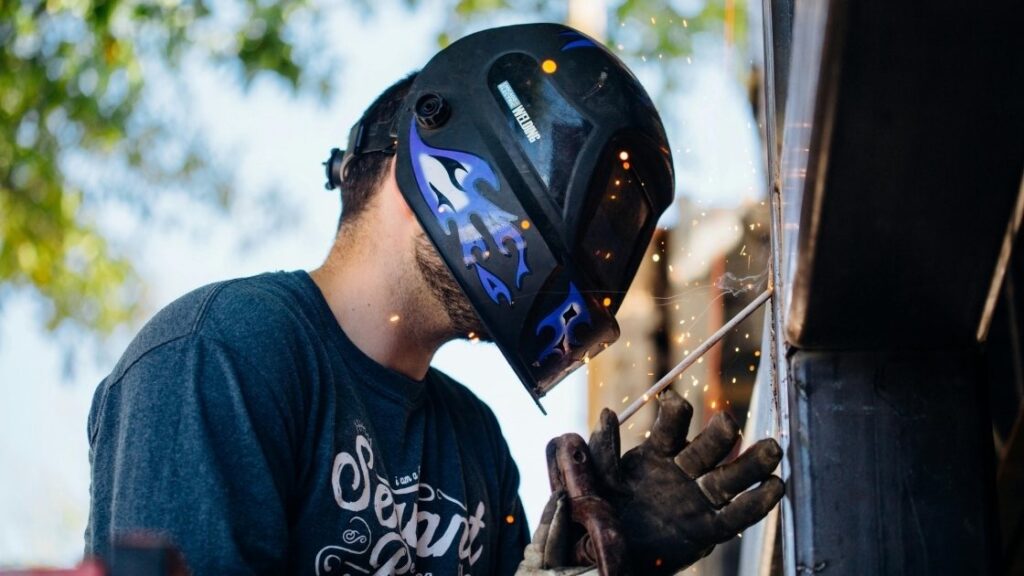
- Lifting a welding helmet for “just one quick tack” a textbook cause of arc eye
- Wearing scratched or outdated IR lenses past their service life
- Using generic sunglasses for industrial glare protection
- Skipping side shields, which lets IR radiation enter laterally
- Relying on a single layer of gear during extreme heat tasks
- Ignoring annual eye exams because no symptoms are present
Correcting any one of these habits produces an immediate, measurable drop in injury risk.
Building a Workplace Culture of Eye Safety
Gear does not prevent injuries by itself culture does. The Centers for Disease Control and Prevention reports that most workplace eye injuries occur either because workers were not wearing protection or were wearing the wrong type for the hazard.
Short toolbox talks, clear PPE policies, accessible replacement gear, and leaders who model compliance quietly drive injury rates down. Organizations that treat vision heat protection as a daily ritual not an annual compliance slide see the largest measurable reductions in claims and lost-time incidents.
Even small crews benefit. A five-minute pre-job huddle that confirms shade number, certification, and fit prevents the overwhelming majority of flash burns before they happen.
Conclusion
Heat remains one of the most underestimated long-term threats to human eyesight, and simultaneously one of the most preventable. A smart combination of IR-filtering lenses, certified welding shields, UV-blocking sunglasses, solid first-aid knowledge, and disciplined daily habits dramatically lowers the risk of flash burns, cataracts, and irreversible vision loss.
Treat vision heat protection with the same seriousness you give to fire safety: plan for it, train for it, rehearse the emergency response, and never cut corners. Your future self and your family will thank you for every shift spent behind the correct lens.
If this guide shifted how you think about ocular safety, share it with a teammate who works around heat, drop your own field-tested tips in the comments, and schedule your next full eye exam before the end of the month.
1. What is vision heat protection and who actually needs it?
Vision heat protection refers to eyewear and habits that shield the eyes from radiant heat, infrared rays, UV, and hot debris. Anyone welding, operating near furnaces, fighting fires, or spending long hours outdoors benefits from certified thermal eye gear.
2. Can regular sunglasses protect my eyes from industrial heat?
No. Standard sunglasses block visible glare and some UV, but they lack the IR filters and impact ratings required for welding or furnace work. Always choose ANSI Z87.1 or EN 166 certified eyewear whenever industrial heat is present.
3. What is arc eye and how serious is it?
Arc eye, medically known as photokeratitis, is a sunburn-like corneal injury caused by intense UV and IR exposure. Symptoms typically appear 6 to 12 hours after exposure, and most cases heal within 24 to 48 hours with rest and proper medical evaluation.
4. How often should heat-resistant safety eyewear be replaced?
Inspect lenses before each shift and replace them at the first sign of pitting, cracks, or coating damage. Even without visible wear, most manufacturers recommend replacement every one to two years to preserve full IR and UV blocking capacity.
5. Does OSHA legally require employers to provide thermal eyewear?
Yes. Under OSHA standard 1910.133, employers must supply appropriate eye and face protection whenever workers face hazards such as flying particles, molten metal, or injurious light radiation. Non-compliance can trigger citations and financial penalties.
6. Can long-term heat exposure really cause cataracts?
Yes. Chronic infrared radiation from furnaces and welding arcs is a documented cause of “glassblower’s cataract,” and sustained outdoor UV exposure is strongly linked to earlier cataract formation, according to the World Health Organization.