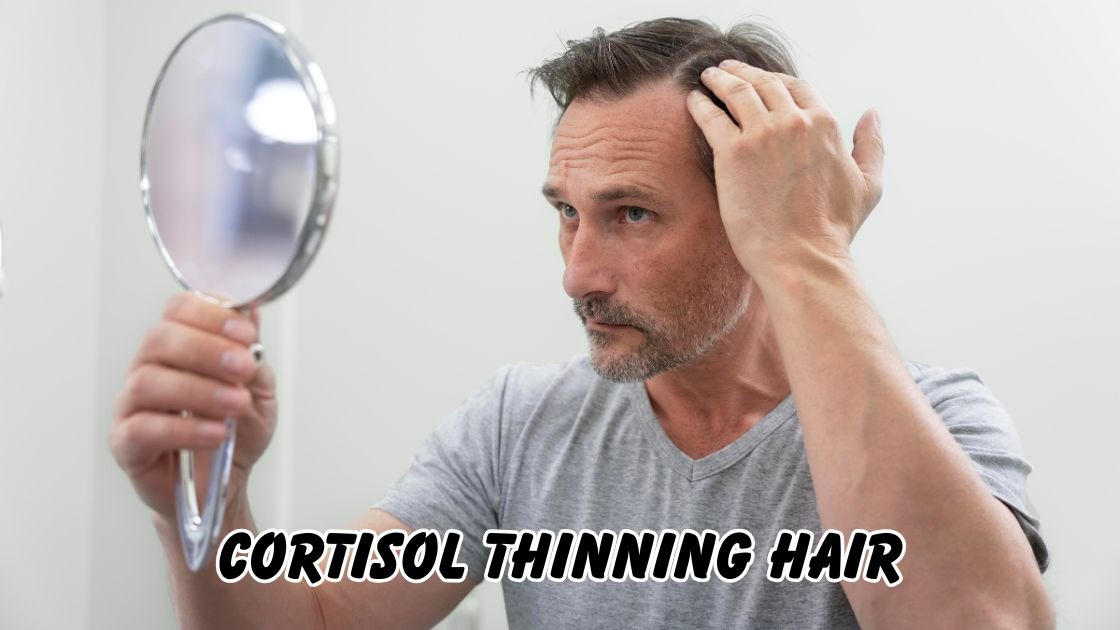
Cortisol directly cause your hair to thin. When this stress hormone stays elevated for weeks or months, it pushes healthy hair follicles out of their growth phase too early and traps them in a prolonged resting state. The result is gradual thinning, excessive shedding, and visibly weaker strands. A 2021 study led by Dr. Ya-Chieh Hsu at Harvard University, published in the journalNature, confirmed that the stress hormone corticosterone the mouse equivalent of human cortisol directly suppressed hair follicle stem cell activity in laboratory models.
That finding matters because it moved the conversation beyond “stress causes hair loss” into something far more specific: cortisol itself interferes with the molecular signals your follicles need to produce new hair. This article explains exactly how that process works, what warning signs to watch for, and what the current research says about reversing the damage.
Table of Contents
How Does Cortisol Cause Hair Thinning?
Cortisol disrupts your hair growth cycle by delaying the growth phase and extending the resting phase, which leads to increased shedding and thinner regrowth over time.
Your hair grows in a repeating cycle with three main stages. The anagen (growth) phase is when the follicle actively produces a new strand. The catagen (transition) phase is a short period where growth slows. The telogen (resting) phase is when the strand eventually falls out to make room for a new one.
Under normal conditions, roughly 85-90% of your hair sits in the anagen phase at any given time. When cortisol levels remain chronically high, that balance shifts. According to a peer-reviewed paper published in the Journal of Drugs in Dermatology (Thom, 2016), elevated cortisol reduces the production of two critical skin components hyaluronan and proteoglycans by approximately 40%. These molecules support the structure around each hair follicle. Without them, follicles weaken and hair strands grow thinner with each new cycle.
Here is what happens step by step:
- Chronic stress triggers your adrenal glands to release cortisol continuously.
- Elevated cortisol suppresses a molecule called GAS6, which normally activates hair follicle stem cells, as the Harvard Nature study demonstrated.
- Without adequate stem cell activation, follicles remain stuck in the telogen resting phase far longer than they should.
- The anagen growth phase shortens, meaning each new strand grows for less time and reaches a shorter length before falling out.
- Over repeated cycles, the follicles themselves begin to miniaturize, producing progressively finer and less visible hair.
This is not the same as normal daily shedding. Losing somewhere around 50 to 100 hairs per day falls within a healthy range. Cortisol-driven thinning pushes that number significantly higher and reduces the quality of every strand that replaces the lost ones.
Cortisol vs. Other Causes of Hair Loss: Key Differences
Not all hair thinning comes from cortisol. Knowing how stress-related shedding differs from genetic or autoimmune hair loss helps you pursue the right solution.
| Factor | Cortisol-Related Thinning | Androgenetic Alopecia (Genetic) | Alopecia Areata (Autoimmune) |
| Primary trigger | Chronic stress and elevated cortisol | DHT hormone and genetic sensitivity | Immune system attacks follicles |
| Pattern | Diffuse thinning across the entire scalp | Receding hairline or crown thinning (men); widening part (women) | Patchy, round bald spots |
| Onset | Often sudden, following a stressful period | Gradual, over months or years | Sudden, unpredictable |
| Reversibility | Often reversible once cortisol normalizes | Progressive without treatment | Unpredictable; may regrow spontaneously |
| Typical age group | Any age, tied to stress exposure | Usually begins in 20s-40s | Any age, often before 30 |
The distinguishing feature of cortisol-driven hair thinning is its diffuse pattern. You likely will not see a receding hairline or isolated bald patches. Instead, your ponytail feels thinner, your part looks wider, and you find more hair on your pillow, in the shower drain, and tangled in your brush spread evenly rather than concentrated in one area.
Warning Signs That Cortisol Is Behind Your Hair Thinning
The three clearest indicators of cortisol-related hair loss are sudden diffuse shedding following a stressful period, thinning that affects the entire scalp rather than specific zones, and simultaneous symptoms of chronic stress elsewhere in your body.
Watch for these signals:
- You notice significantly more hair falling out than usual, starting roughly two to four months after a major stressful event or the beginning of a prolonged stressful phase. This delay exists because follicles pushed into telogen take several weeks before the resting strand actually drops.
- The thinning is spread evenly across your scalp. There are no distinct bald spots or a dramatically receding front line.
- You are simultaneously experiencing other hallmarks of elevated cortisol, such as persistent fatigue despite adequate sleep, unexplained weight gain around the midsection, difficulty concentrating, increased anxiety, or disrupted sleep patterns.
- Your skin has also changed. According to CanAlt Health Laboratories, elevated cortisol decreases collagen and elastin production, which can show up as thinner skin, slower wound healing, or increased dryness alongside your hair changes.
- A healthcare provider confirms elevated cortisol through salivary or urinary testing. As noted by practitioners at Rupa Health, salivary and urinary cortisol tests measure the bioavailable, unbound cortisol in your system, offering a more accurate picture of hormonal impact than standard blood serum tests alone.
If several of these signs align with your experience, cortisol is a strong suspect. However, thyroid dysfunction, iron deficiency, and hormonal shifts (such as postpartum changes) can mimic similar patterns. A proper evaluation from a dermatologist or endocrinologist remains the most reliable path to a clear answer.
How to Lower Cortisol Levels to Stop Hair Thinning
The most effective approach to reversing cortisol-driven hair loss is addressing the hormone itself. Lowering chronically elevated cortisol gives your follicles a chance to re-enter the anagen growth phase naturally.
The encouraging reality is that stress-related hair thinning is often temporary. Once cortisol levels return to a healthy range, many people see noticeable regrowth within three to six months. The key is consistency across multiple fronts not a single magic fix.
Stress Management Techniques That Actually Work
Meditation and deep breathing exercises are not vague wellness suggestions. They carry measurable hormonal impact. Research published by the National Institutes of Health has repeatedly linked mindfulness-based practices to reduced cortisol output from the adrenal glands.
Physical exercise is equally powerful. Moderate activity such as brisk walking, swimming, or cycling for 30 minutes most days helps regulate the hypothalamic-pituitary-adrenal (HPA) axis the system that controls cortisol release. However, extremely intense exercise without adequate recovery can temporarily spike cortisol, so balance matters.
Sleep quality deserves just as much attention as sleep quantity. Cortisol follows a natural daily rhythm, peaking in the early morning and dropping to its lowest around midnight. Disrupted or insufficient sleep throws this rhythm off, keeping cortisol artificially elevated during hours when it should be low. Aim for seven to nine hours of uninterrupted sleep in a cool, dark room.
Nutrition That Supports Healthy Cortisol Levels
What you eat directly influences how your body processes stress hormones. An anti-inflammatory dietary pattern rich in whole foods helps keep cortisol in check while simultaneously supplying the nutrients your hair follicles need.
Focus on these nutritional priorities:
- Omega-3 fatty acids from sources like salmon, sardines, walnuts, and flaxseed help moderate the inflammatory cascade that elevated cortisol triggers.
- B vitamins particularly biotin (B7), B6, and B12 support keratin production, the structural protein that forms each hair strand.
- Iron and zinc deficiencies are common co-factors in stress-related shedding. Leafy greens, legumes, pumpkin seeds, and lean red meat help maintain adequate stores.
- Research indicates that many people with hair thinning also test low in vitamin D, making supplementation worth discussing with your doctor.
- Magnesium-rich foods like dark chocolate, almonds, and avocados support nervous system regulation and may help blunt excessive cortisol spikes.
According to practitioners at Rupa Health, the Mediterranean diet built around vegetables, fruits, healthy fats, and lean proteins is specifically associated with lower cortisol levels and may serve as a practical dietary framework for anyone dealing with stress-related hair thinning.
Medical and Clinical Treatment Options
When lifestyle changes alone are not enough, several evidence-based medical treatments can accelerate hair recovery alongside your cortisol management efforts.
Minoxidil (Topical)
Minoxidil is an FDA-approved topical treatment that stimulates blood flow to the scalp and can extend the anagen growth phase. While it does not lower cortisol directly, it counteracts one of cortisol’s main effects the premature shortening of the growth cycle.

PRP Therapy (Platelet-Rich Plasma)
PRP involves drawing a small blood sample, concentrating the platelets, and injecting them into thinning areas of the scalp. According to hair restoration specialists at Meshkin Medical, the growth factors released by platelets stimulate dormant follicles and strengthen existing hair. This treatment has shown particular promise for diffuse thinning patterns exactly the type cortisol produces.
Low-Level Laser Therapy
Laser caps and in-office laser treatments increase scalp blood circulation and stimulate cellular activity within follicles. This is a painless, non-invasive option that works well as a complement to other treatments rather than a standalone solution.
Cortisol Testing
Before starting any treatment, confirming that cortisol is actually elevated provides a clear direction. As noted by CanAlt Health Laboratories, hair cortisol analysis is emerging as a useful clinical tool because it reflects long-term hormonal patterns over weeks rather than a single-moment snapshot. Salivary cortisol panels that track your levels from morning through bedtime offer another reliable assessment method.
Natural Supplements That May Help
A handful of plant-based compounds have shown potential for reducing cortisol and supporting hair health, though they should complement not replace foundational lifestyle changes.
According to Life Extension, a lychee and green tea extract blend significantly lowered cortisol levels in clinical trials. In one pilot study, participants taking this blend reported improvements in hair thickness and new growth along the hairline. Extracts from magnolia bark and phellodendron bark have also demonstrated cortisol-lowering effects in controlled studies.
Ashwagandha is another widely studied adaptogen. Multiple clinical trials have linked ashwagandha supplementation to measurable reductions in serum cortisol. However, always consult your healthcare provider before adding any supplement, especially if you are taking medication or managing other health conditions.
Conclusion
Cortisol and thinning hair share a direct, scientifically documented connection. When chronic stress keeps your cortisol elevated, it suppresses the molecular signals your follicles depend on, shortens your growth cycle, and gradually weakens each strand that tries to replace the ones you lose.
The path forward involves three layers. First, manage the cortisol itself through consistent stress reduction, quality sleep, and anti-inflammatory nutrition. Second, support your follicles directly with targeted nutrients like biotin, iron, zinc, and vitamin D. Third, if thinning has progressed significantly, explore clinical options such as minoxidil, PRP therapy, or laser treatments with a qualified specialist.
The most important takeaway is that cortisol-related hair thinning is usually reversible. Your follicles are not destroyed, they are dormant. Give them the right hormonal environment, and regrowth becomes a realistic expectation rather than a hopeful wish.
If this article helped you understand what your hair has been telling you, share it with someone else who might be silently struggling with stress-related shedding. And if you have already started your recovery journey, leave a comment below with what worked for you. Your experience could guide someone else toward the right first step.
Frequently Asked Questions
Q1: Can cortisol permanently damage hair follicles? In most cases, no. Cortisol-related thinning is typically reversible because the follicles enter a prolonged resting state rather than being destroyed. Once cortisol levels normalize and the growth cycle resets, regrowth usually begins within three to six months.
Q2: How long does it take for hair to grow back after reducing cortisol? Most people begin noticing less shedding within four to eight weeks of sustained cortisol reduction. Visible regrowth and improved thickness generally appear between three and six months, since hair grows at an average rate of roughly half an inch per month.
Q3: Does cortisol cause hair thinning in women more than men? Cortisol-driven hair thinning affects both men and women. However, the condition known as telogen effluvium, the most common stress-related shedding pattern, occurs more frequently in women, according to dermatological literature published in the Journal of Drugs in Dermatology.
Q4: What is the difference between cortisol hair loss and telogen effluvium? They are closely related. Telogen effluvium is the clinical name for diffuse shedding caused when a large number of follicles enter the resting phase simultaneously. Elevated cortisol is one of the most common triggers of telogen effluvium, though other triggers like illness, surgery, or nutritional deficiency can also cause it.
Q5: Can exercise reduce cortisol enough to stop hair thinning? Regular moderate exercise is one of the most effective natural methods for lowering cortisol. It regulates the HPA axis and improves sleep quality, both of which directly influence cortisol output. Combined with proper nutrition and stress management, exercise can meaningfully contribute to slowing and reversing stress-related hair loss.
Q6: Should I get my cortisol levels tested if my hair is thinning? Yes, testing is a smart step especially if your thinning is diffuse and accompanied by other stress symptoms like fatigue, weight gain, or sleep disruption. Salivary cortisol panels or hair cortisol analysis can reveal whether your levels are chronically elevated, helping you and your doctor choose the most targeted treatment approach.