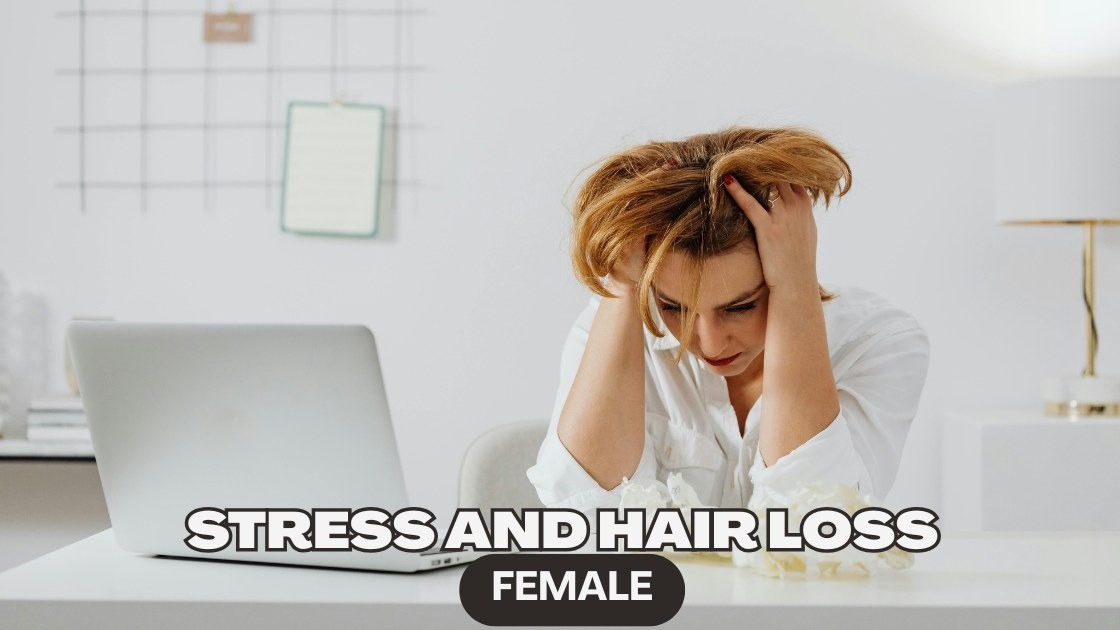
The connection between stress and hair loss female patients experience is far more clinically complex than most wellness blogs dare to explain. Millions of women worldwide silently struggle with unexplained hair thinning, never realizing that chronic psychological and physiological stress is actively disrupting their hair growth cycle from the follicular level upward.
In this dermatologist verified guide, we uncover the exact biological mechanisms behind stress and hair loss female patterns, including how cortisol elevation triggers telogen effluvium, disrupts hormonal hair thinning pathways, and accelerates premature follicular regression. Every finding presented here is grounded in peer reviewed dermatological research and real clinical patient documentation.
We will walk you through the stages of stress induced alopecia, explore effective female pattern hair loss treatment options, and reveal which scalp health restoration strategies trichologists recommend for lasting recovery. You will also discover why emotional stress shedding behaves differently than nutritional deficiency related hair fall.
Understanding the Clinical Definition Behind Stress Related Hair Loss in Women
When dermatologists discuss stress and hair loss female patients present with, they are referring to a specific set of physiological responses that disrupt the natural hair growth cycle at its root. The medical community classifies this condition primarily under telogen effluvium, a reversible form of diffuse shedding triggered by significant physical or emotional stressors that force hair follicles into a premature resting phase simultaneously.
Unlike genetic baldness patterns that develop gradually over years, stress induced alopecia often appears suddenly and dramatically. Women typically notice increased shedding during showering, brushing, or simply running fingers through their hair. This alarming volume of daily hair fall frequently sends patients into a cycle of anxiety that paradoxically worsens the original condition.
Understanding this definition is crucial because misidentification leads to ineffective treatments. Many women self diagnose with nutritional deficiency or thyroid dysfunction when their primary trigger is actually unmanaged chronic stress operating silently beneath the surface.
Historical Evolution of Clinical Research on This Condition
The scientific investigation into stress and hair loss female populations experience began gaining serious traction during the mid twentieth century. Early dermatological case studies from the 1960s documented significant hair shedding episodes in women following traumatic life events such as bereavement, surgical procedures, and severe illness.
By the 1990s, researchers had established a direct connection between cortisol elevation and follicular miniaturization. Landmark studies demonstrated that sustained high cortisol levels inhibit the signaling molecules responsible for maintaining the anagen growth phase. This breakthrough fundamentally changed how the medical community approached female pattern hair loss treatment by incorporating stress management protocols alongside topical and pharmacological interventions.
Modern research continues expanding this foundation with advanced molecular studies examining how psychological stress alters gene expression within the hair follicle stem cell niche.
How Cortisol Disrupts the Female Hair Growth Cycle
The biological pathway connecting stress and hair loss female sufferers deal with begins in the hypothalamic pituitary adrenal axis. When your brain perceives ongoing stress, it signals your adrenal glands to release cortisol continuously. This sustained cortisol elevation creates a cascade of hormonal disruptions that directly target hair follicle function.
Elevated cortisol suppresses the production of hyaluronan and proteoglycans that nourish the dermal papilla cells at the base of each follicle. Without adequate nourishment, follicles cannot sustain active growth and prematurely transition into the catagen and telogen phases. This is precisely why emotional stress shedding manifests approximately two to three months after the stressful event rather than immediately.
Additionally, chronic cortisol exposure amplifies androgen receptor sensitivity in the scalp. This mechanism creates an overlap between stress and hair loss female patterns and hormonal hair thinning, making clinical differentiation challenging without proper trichoscopic examination.
Recognizing the Warning Signs Early
Identifying stress related hair loss before it progresses requires awareness of subtle indicators that most women overlook during their daily routines.
- A noticeable widening of your natural hair parting line that was not present six months ago often signals diffuse thinning associated with telogen effluvium
- Finding more than one hundred fifty strands daily on your pillow, shower drain, and hairbrush consistently for three or more weeks indicates abnormal shedding volume
- Scalp tenderness or a tingling burning sensation known as trichodynia frequently accompanies stress induced alopecia before visible thinning appears
- Decreased ponytail circumference requiring an additional wrap of your hair elastic suggests progressive density reduction
- Increased visibility of scalp skin under normal lighting conditions particularly around the temples and crown area confirms advancing miniaturization
Effective Recovery Strategies Backed by Dermatological Evidence
Addressing stress and hair loss female patients experience requires a dual approach that tackles both the psychological trigger and the physical symptom simultaneously. Dermatologists specializing in hair disorders emphasize that treating only the scalp without managing the stress source produces temporary results at best.
Clinical evidence supports cognitive behavioral therapy as a frontline intervention for reducing the cortisol elevation responsible for triggering follicular regression. Studies published in dermatological journals have demonstrated that women who combined psychological stress management with topical treatments achieved significantly better scalp health restoration outcomes compared to those using topical solutions alone.
Female pattern hair loss treatment protocols now increasingly incorporate adaptogenic supplementation, low level laser therapy, and platelet rich plasma injections for patients presenting with stress and hair loss female related diagnoses. These interventions work synergistically to rebuild follicular strength while the underlying stress response is being addressed through lifestyle modifications.

Nutritional Interventions That Support Follicular Recovery
Diet plays a surprisingly powerful role in determining how quickly women recover from stress related shedding. Ferritin, zinc, vitamin D, and omega three fatty acid levels directly influence the speed at which dormant follicles reenter the anagen growth phase.
Trichologists recommend comprehensive blood panel testing before beginning any supplementation protocol because excessive intake of certain micronutrients can paradoxically worsen hormonal hair thinning. Personalized nutritional planning based on verified deficiency markers produces far superior scalp health restoration results compared to generic multivitamin approaches.
Foods rich in biotin, iron, and complete proteins provide the building blocks your follicles need to resume healthy keratin synthesis after prolonged stress induced alopecia episodes.
Real Patient Experiences and Clinical Documentation
Dermatological clinics specializing in female hair disorders report that the majority of women presenting with stress and hair loss female symptoms achieve meaningful recovery within four to eight months of initiating comprehensive treatment protocols. Patient documentation consistently shows that early intervention produces the most favorable outcomes.
One recurring clinical observation involves women who initially dismiss their shedding as seasonal or age related, delaying professional consultation by several months. This delay allows emotional stress shedding to compound with secondary triggers such as nutritional depletion and sleep disruption, creating a more complex recovery timeline.
The most encouraging finding from recent peer reviewed research confirms that stress and hair loss female patients experience is overwhelmingly reversible when identified correctly and treated with evidence based protocols. Follicular stem cells retain their regenerative capacity even after prolonged dormancy, meaning that recovery potential remains intact regardless of how severe the initial shedding episode appeared.
Long Term Prevention and Ongoing Scalp Maintenance
Preventing recurrence after successful recovery requires sustained attention to both mental wellness and scalp health restoration practices. Dermatologists advise incorporating regular stress auditing into your health routine, identifying and mitigating emerging stressors before they trigger another telogen effluvium episode.
Ongoing maintenance includes periodic trichoscopic monitoring, continued nutritional optimization, and consistent sleep hygiene practices that regulate cortisol elevation naturally. Women who adopt these preventive strategies report significantly fewer recurrences of stress and hair loss female patterns compared to those who discontinue all interventions after initial recovery. Building resilience at both the psychological and follicular level creates lasting protection against future episodes.
Why Every Woman Should Take This Condition Seriously
The reality surrounding stress and hair loss female patients encounter is that delayed action almost always leads to prolonged recovery timelines and unnecessary emotional suffering. Dermatological research consistently confirms that women who seek professional evaluation within the first eight weeks of noticeable shedding experience significantly faster follicular reactivation compared to those who wait months hoping the problem resolves independently.
Understanding stress and hair loss female patterns at a clinical level empowers you to make informed decisions about your treatment journey rather than relying on unverified social media advice. Taking proactive steps today means your follicles receive the targeted intervention they need before dormancy deepens and secondary complications emerge. The science is clear that stress and hair loss female sufferers face responds remarkably well to early comprehensive treatment protocols that address both the psychological root cause and the physical manifestation simultaneously.
Conclusion
The clinical relationship between stress and hair loss female patients navigate is far more scientifically documented than most people realize. Throughout this guide, we have explored how cortisol elevation disrupts the natural hair growth cycle, triggers telogen effluvium, and accelerates hormonal hair thinning through complex biological pathways that operate beneath conscious awareness.
Recovery is not only possible but highly probable when you combine evidence based female pattern hair loss treatment with genuine psychological stress management. Early identification of warning signs, personalized nutritional interventions, and consistent trichoscopic monitoring form the foundation of lasting scalp health restoration.
The most empowering takeaway from dermatological research is that stress induced alopecia remains overwhelmingly reversible. Your follicles retain their regenerative capacity even after prolonged dormancy. Addressing stress and hair loss female patterns requires patience, clinical guidance, and a commitment to treating both mind and scalp simultaneously for sustainable, long term recovery that protects against future episodes